The Western Wardrobe Checklist: 18 Key Pieces
A Western wardrobe checklist with 18 key pieces, styling rules, smart spending advice, and outfit examples for a modern, grounded everyday closet.
STYLEFINDEN editorial review: checked before publication for wearability, proportion logic and real-life outfit use. We explain our editorial method and image policy on the About page and keep affiliate independence details in the affiliate disclosure.
A Western wardrobe checklist works best as a small system of 18 pieces, not a pile of themed purchases. Start with footwear and denim, then add shirts, layers, and a few hard-working accessories. The result should handle a coffee run, a concert, and dinner without looking as if you packed for a costume party.
Use this beside the Western & Cowgirl Style Guide and the Western outfit collection. This checklist gives each piece a job, so you know where to spend and which gaps can wait.
What Is a Western Wardrobe Checklist?
A Western wardrobe checklist is a capsule built around the material and proportion cues of American West clothing: a shaped boot, denim with enough length, leather or suede, and one shirt or accessory with visible heritage detail. It is not a rulebook requiring a hat, fringe, or a full rodeo reference. The point is repeatable combinations that retain their structure when one piece changes.
The useful distinction is between an anchor and an accent. Boots, a jacket, and jeans are anchors because they set the silhouette. A buckle, scarf, or turquoise ring is an accent because it sharpens an outfit already carrying the idea. Buy anchors first; accents only make sense after the base has weight.
Where the Modern Western Closet Came From
Western dress began as working clothing in the American West during the late nineteenth century. Boots protected riders, denim held up to work, and hats dealt with sun and dust. Hollywood Westerns in the 1930s and 1940s took that practical vocabulary far beyond ranch life, turning yokes, pointed toes, and leather belts into a recognized silhouette.
The 1970s brought another shift. Suede, flared denim, and embroidered shirts entered everyday fashion, so Western pieces could sit next to a simple tee or a long skirt. Modern Western dressing keeps that edit: a real boot and good denim carry more authority than a dozen novelty details.
The 18 Key Pieces for a Western Wardrobe
1. Pointed cowboy boots, 2. low-heel ankle boots, and 3. lace-up work boots cover dressy, everyday, and weather-proof ground. Look for leather, a stable heel, and room at the ball of the foot; stiff synthetic shafts and a glossy finish make even strong denim look cheap. Three boot options prevent one dramatic pair from doing every job.
4. Straight-leg jeans, 5. flared jeans, and 6. a denim midi skirt establish the lower half. Straight jeans work with almost any boot, flares need a longer hem that breaks near the toe, and a skirt gives the closet an option for warm evenings. Spend time on inseam length because a boot hidden under cropped denim loses the line that makes the outfit Western.
7. A snap-front Western shirt, 8. a soft cream blouse, and 9. a ribbed tank make the top layer flexible. Snaps, yokes, or restrained embroidery give the shirt its specific role; the blouse brings movement under leather; the tank gives you a clean base under an open shirt or jacket. Save money on the tank, but avoid flimsy fabric in a shirt whose seams will stay visible.
10. A suede jacket, 11. a leather bomber, and 12. a tailored brown blazer create three different kinds of structure. Suede supplies texture without needing fringe, a bomber shortens the torso above a skirt, and a blazer lets boots work in a city setting. A jacket deserves a larger budget because shoulder fit and fabric weight show first.
13. A leather belt, 14. a solid buckle, and 15. a worn-in crossbody bag handle the functional details. The belt gives high-rise denim a clear waist, one buckle gives the outfit a metal point, and a bag brings leather near the body without adding another costume cue. Choose one prominent hardware finish rather than mixing bright silver, brass, and rhinestones.
16. A long skirt, 17. a utility dress, and 18. a structured hat round out the list. The skirt creates movement against firm boots, the dress lets you build an outfit in one step, and the hat stays optional for days when the rest of the proportions are already settled. Counterintuitively, the hat is the final purchase, not the first: it exposes weak boot and denim choices instead of fixing them.
For color choices that support these materials, use the Western color palette guide. Indigo, cream, black, tobacco, burgundy, and weathered red make a small capsule feel broader without adding random novelty colors.
How to Style a Western Wardrobe: Four Rules
Choose one anchor per outfit, then let the other pieces answer it. Pointed boots with a black vest and flared jeans work because the vest sets a compact upper line while the flare makes physical room for the shaft. Adding a hat, fringe, and a giant buckle would compete for the same visual space.
Match fabric weight before matching motifs. A suede jacket over a long skirt works when the short, dense layer marks the waist and the skirt can move below it. Thin fringe over thin ruffles leaves the outfit without a firm edge, so use leather, denim, or a structured belt when the lower half is soft.
Keep one part of the outfit current in proportion. Relaxed jeans, a longer skirt, or a tailored blazer prevent the Western reference from freezing in a film costume. The boot supplies history; the modern cut tells people you chose it for now.
Use accessories as punctuation. One belt buckle or one turquoise item creates a focal point. Repeating both across earrings, bag hardware, scarf, and belt turns craftsmanship into decoration for its own sake.
Common Western Wardrobe Mistakes to Avoid
Avoid buying fringe before buying boots or denim. Fringe photographs well but cannot rescue a weak silhouette, and inexpensive fringe often lies flat or sheds. Put your money into the pair of boots and jeans you can wear several days a week.
Do not hem flares above the boot. The long denim line needs to meet the shoe so the toe and heel still register; a short hem breaks that relationship and makes the flare look accidental. Try jeans with the boots you own before deciding on alterations.
Skip shiny faux leather, novelty buckles, and matching hat-and-boot sets. These items announce the reference before the clothes have earned it. A worn belt, matte leather, and one embroidery detail give the same direction with more control.
Do not treat brown as the only acceptable color. Black boots with blue denim and a dark vest can read as Western through shape alone. Material and proportion matter more than a literal ranch palette.
Six Western Outfit Examples From the Checklist
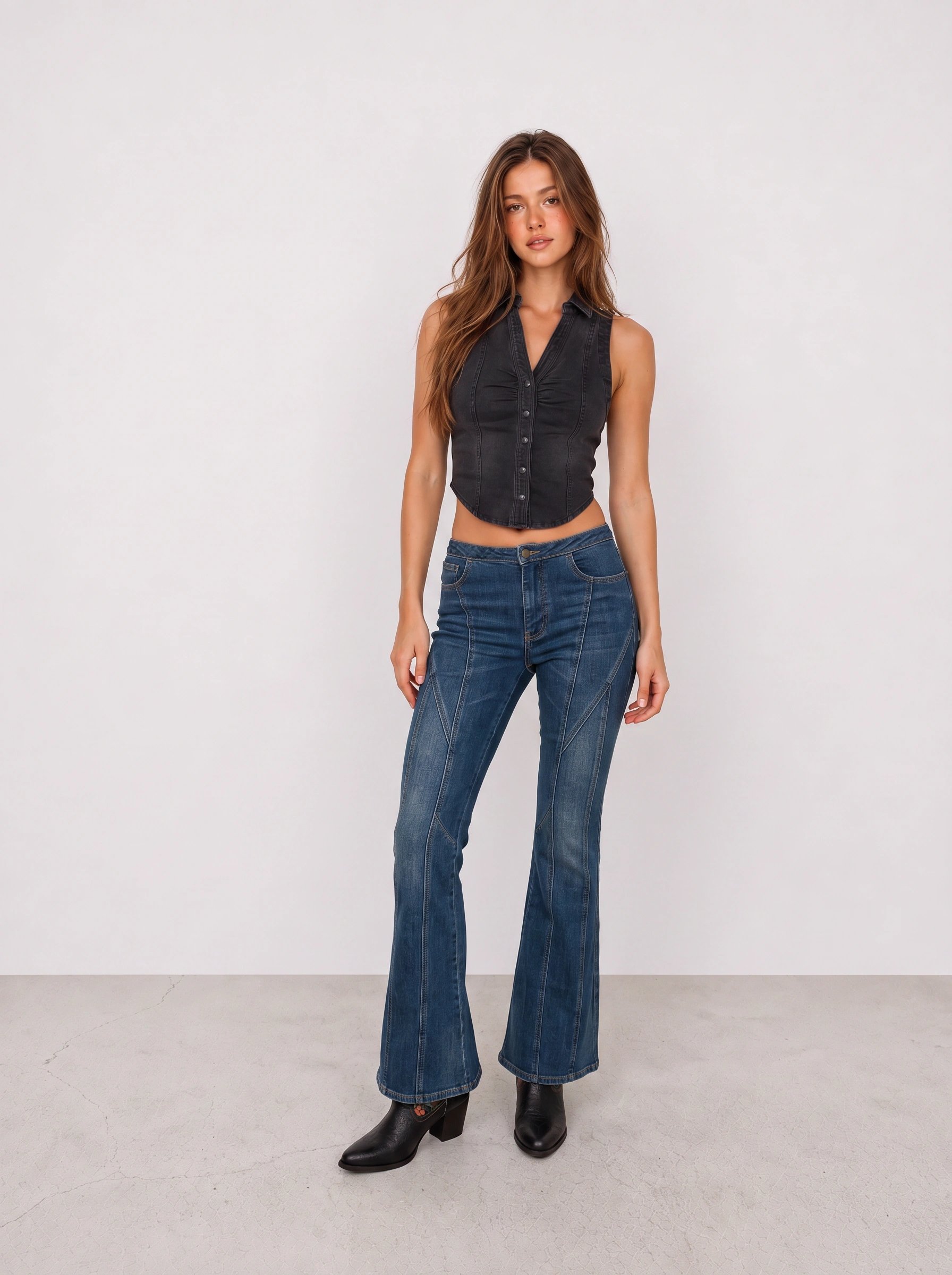
This black vest and flared-jeans outfit uses proportion as its mechanism. The fitted vest compresses the top half, the flare opens at the ankle, and the boot gives that opening a purpose. Without the boot shaft, the jeans become ordinary flares rather than part of a Western formula.
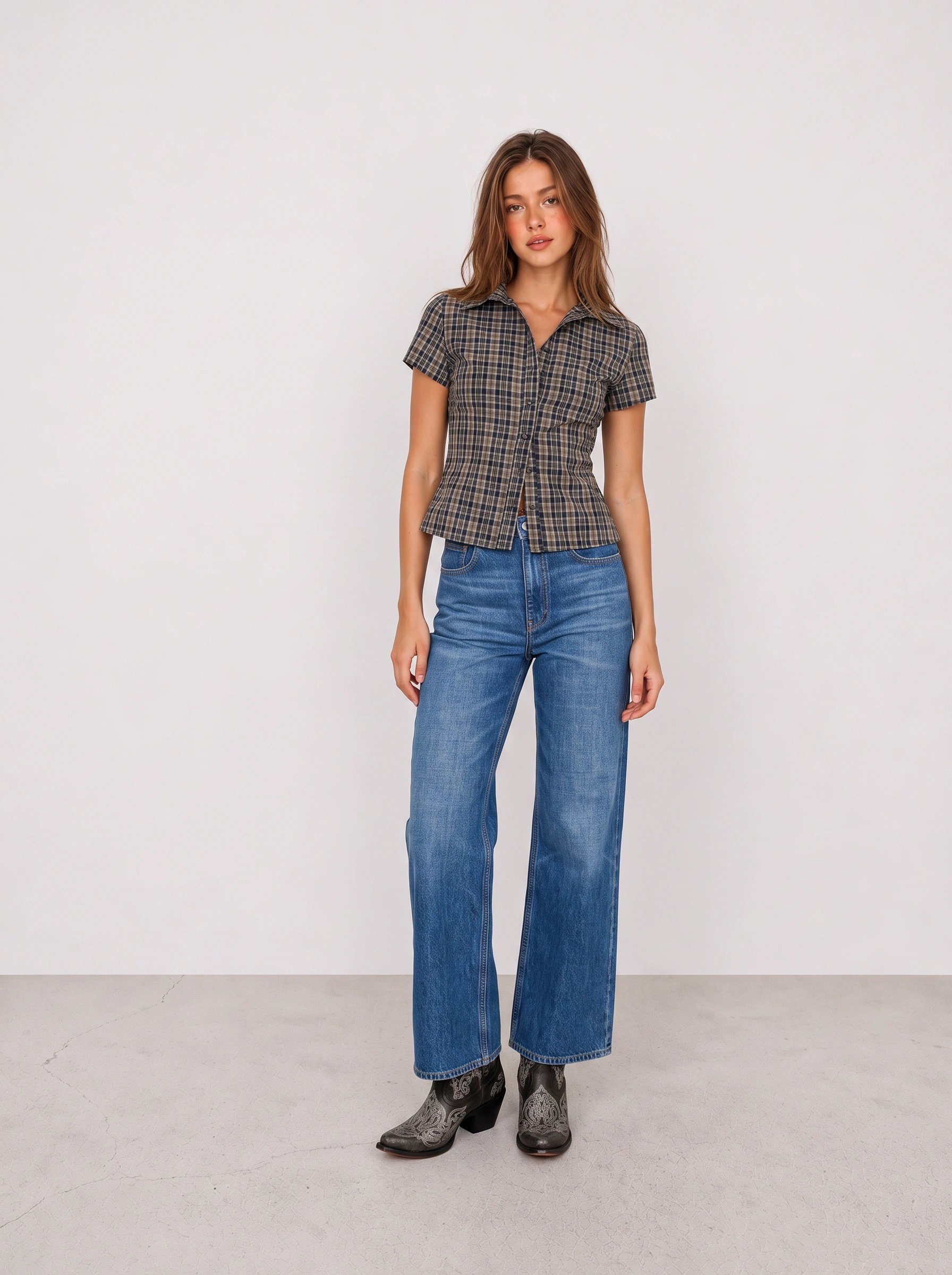
The plaid Western shirt and flared-jeans outfit relies on color logic. Blue denim repeats the cool notes in the plaid, while the boot adds a darker end point below the longer hem. Without the embroidered boot, the outfit reads as a standard weekend plaid shirt and jeans.
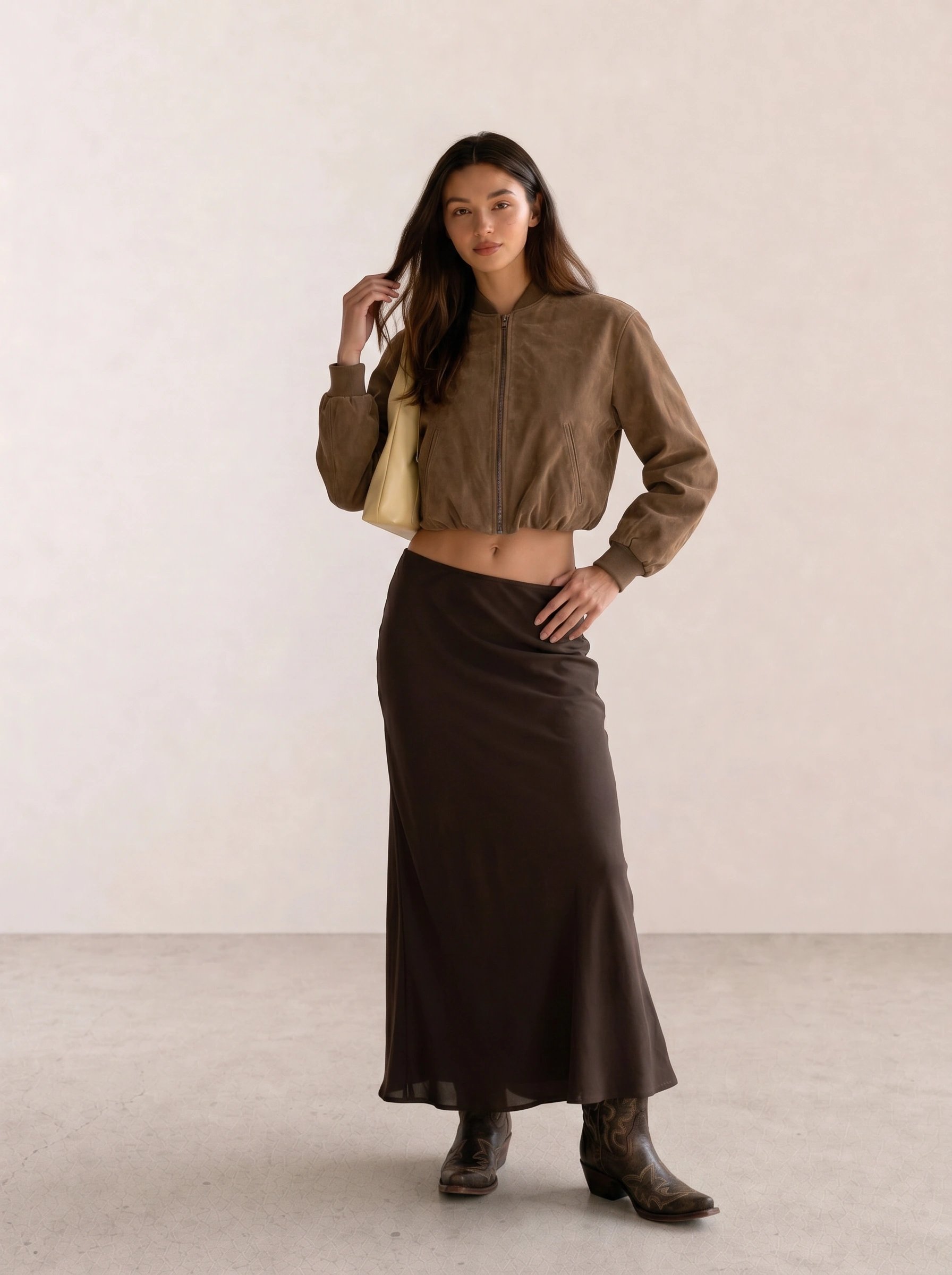
The brown suede bomber and maxi-skirt outfit shows fabric-weight contrast. Cropped suede sets the waist above the fluid skirt, and the boot keeps the lower half connected to the jacket. Without the suede, the skirt would drift toward a generic bohemian look.
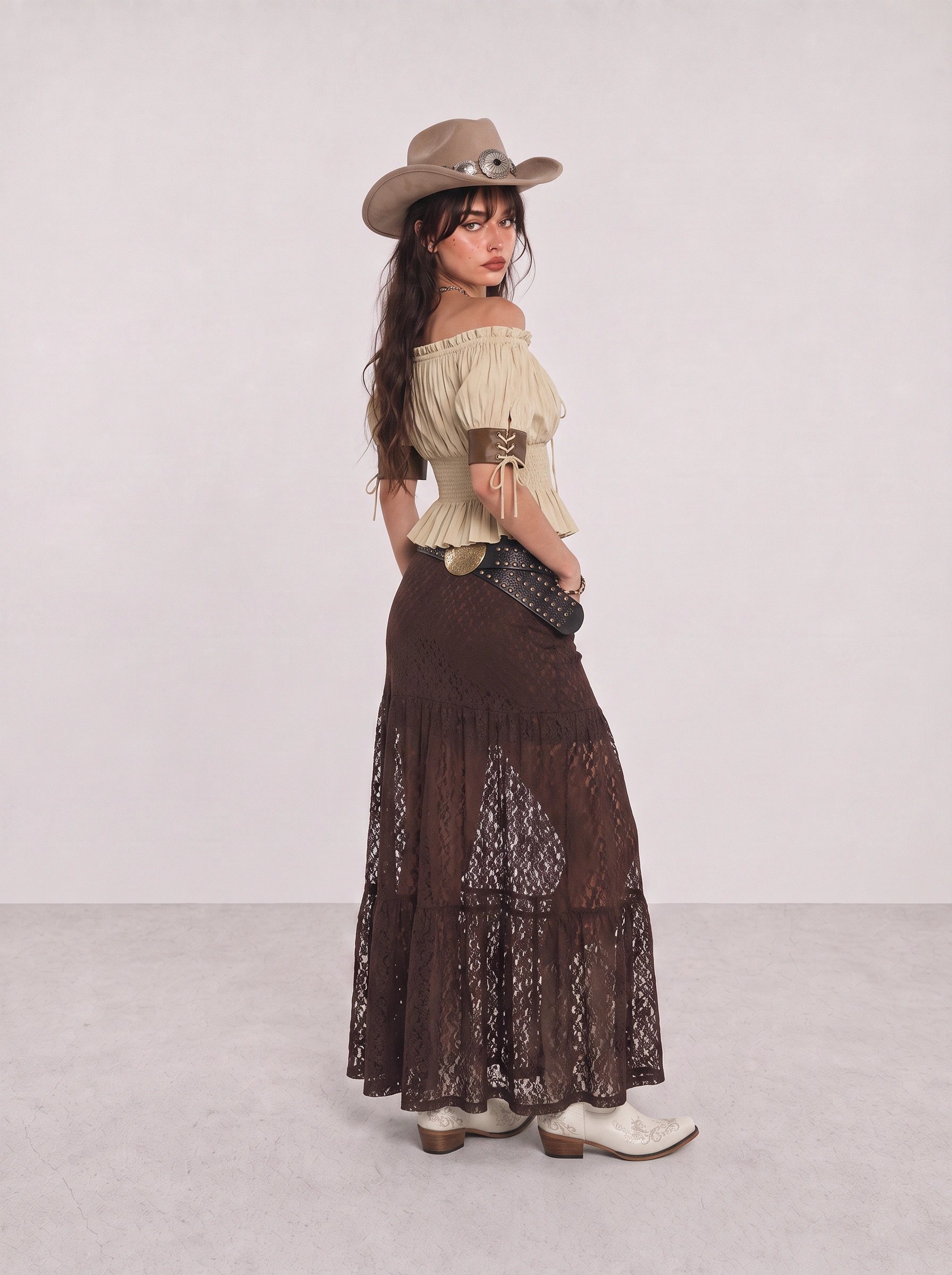
The beige fringe top and brown lace-skirt outfit needs restraint because fringe and lace both move. The solid brown base gives those textures one shared ground, while the footwear keeps the outfit from becoming festival-only. Without the firm boot shape, the movement has no counterweight.
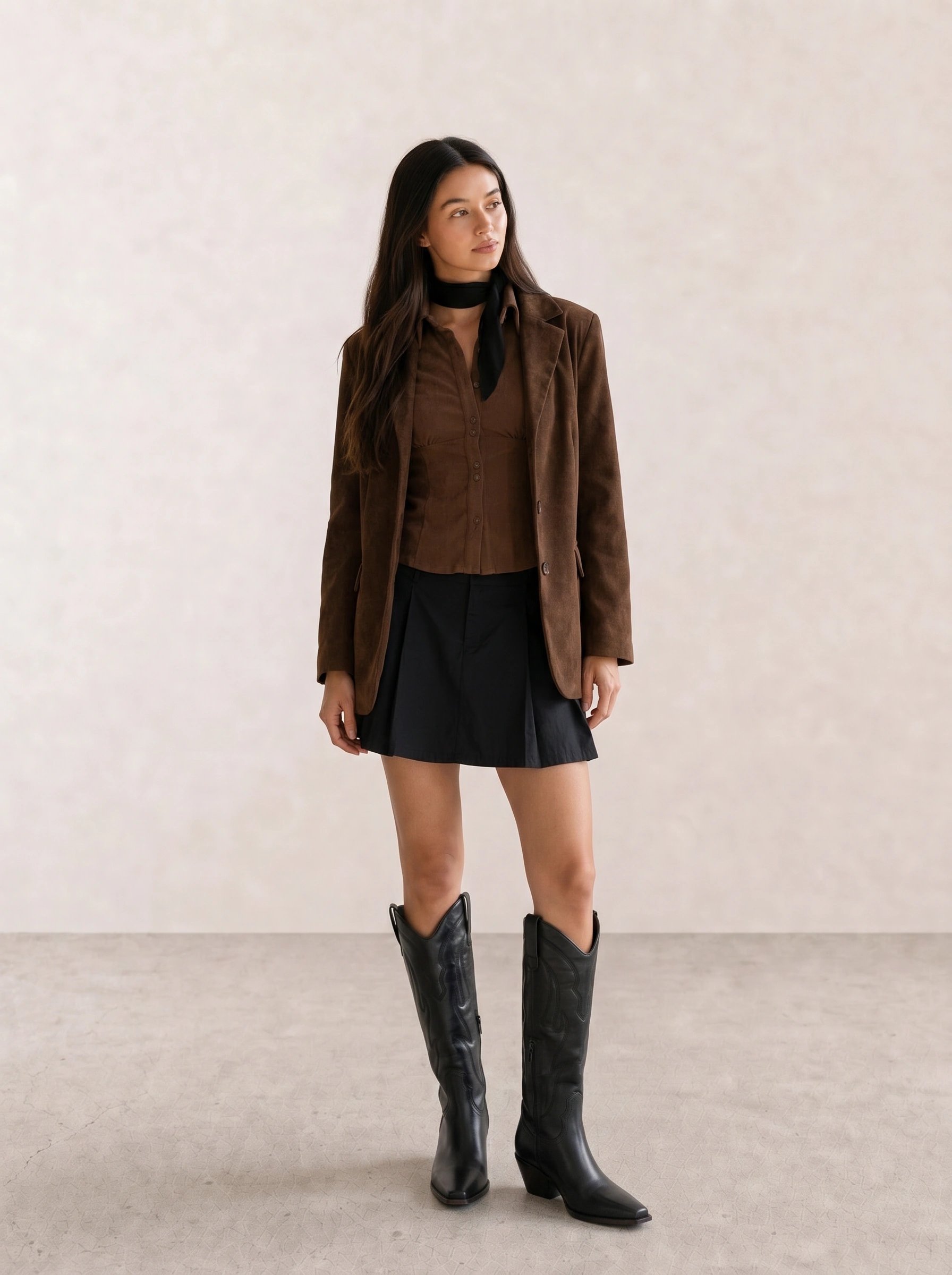
This brown blazer and black-skirt outfit proves the capsule can leave the ranch reference behind. The blazer supplies tailored structure, the short skirt exposes the boot, and the restrained palette works for drinks or a date. Without the pointed boot, the outfit loses its Western edge.
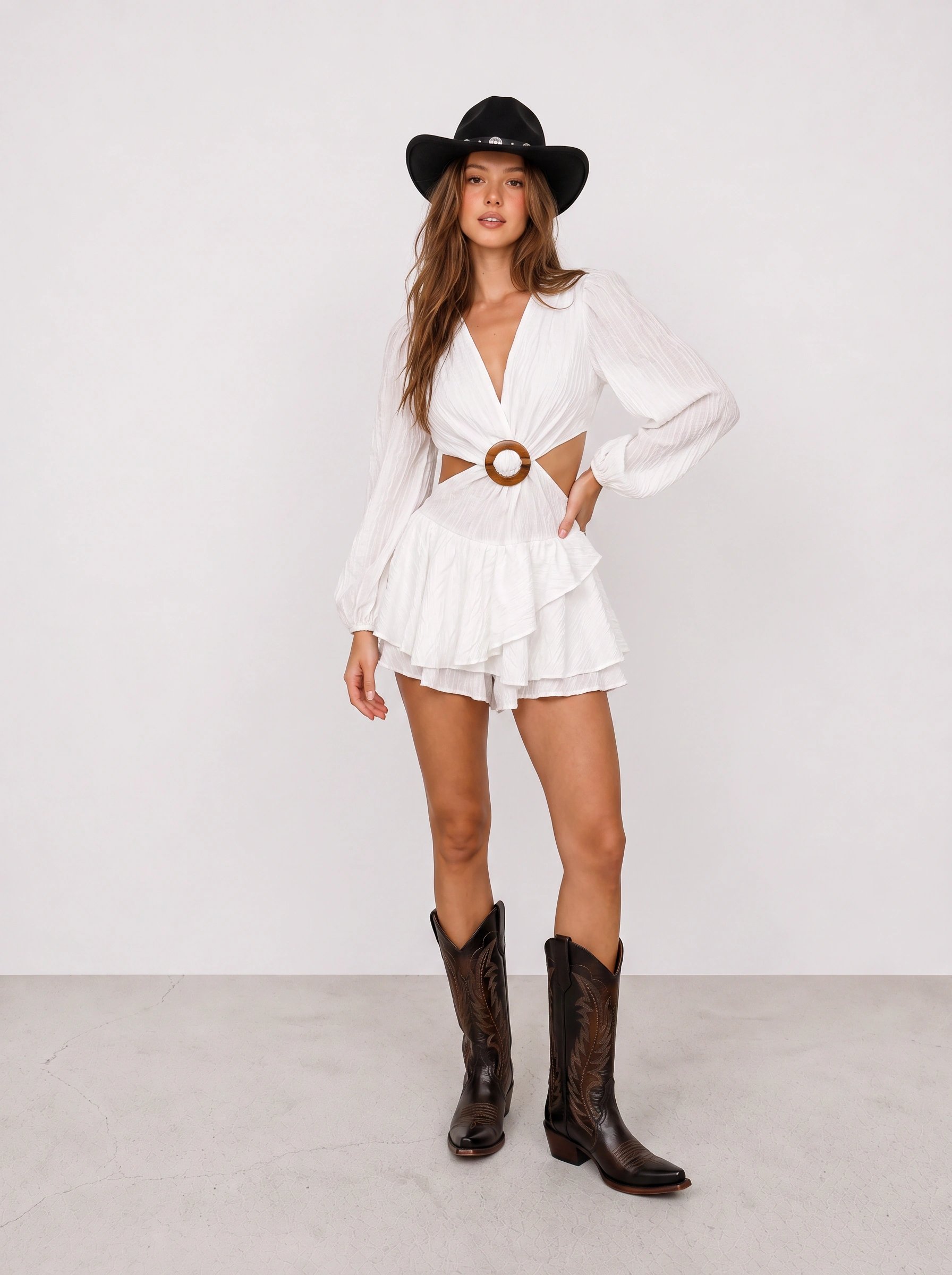
The white ruffle dress with black Western accessories uses a soft-hard contrast. Ruffles move around the body, while the black hat, belt, and boots draw a firm vertical frame. Without the belt, the dress loses the waist that stops it from reading as a plain summer piece.
Western Wardrobe Shopping Guide: Where to Spend and Save
At luxury prices, spend on leather boots, a suede jacket, and a belt with solid hardware. Try boots late in the day when feet are fuller, check the jacket shoulder seam, and ignore decorative stitching if the base fit fails. These pieces take wear and control the silhouette for years.
At mid-range, buy denim, a snap shirt, a leather bag, and the long skirt or utility dress. Denim labels and workwear brands often offer better fabric weight than overtly themed stores. Altering a jean hem costs less than replacing a pair that never works with boots.
At budget prices, save on tanks, blouses, scarves, jewelry, and a first fringe piece. Thrift stores can be useful for broken-in belts and shirts, but inspect leather cracks and boot soles before buying. For boot styling formulas, read
How to Wear Western Boots with Modern Outfits and use fringe and embroidered outfit ideas only after the core capsule is in place.
Western Wardrobe Checklist FAQ
What should be in a Western wardrobe checklist? Start with boots, straight and flared denim, a Western shirt, a structured jacket, a belt, and a bag; then add softer pieces such as a skirt or dress. This 18-piece system gives you enough variety without requiring every Western symbol.
How many cowboy boots do I need for a Western wardrobe? Three pairs cover most needs: pointed cowboy boots, a low-heel ankle boot, and a lace-up work boot. Start with one pointed leather pair if your closet is new, then add the other two when you know where you wear boots.
Can I build a Western wardrobe on a budget? Yes. Spend on one reliable boot and jeans that fit over it, then buy tanks, scarves, blouses, and jewelry at lower prices. A limited closet looks stronger when the expensive pieces establish shape and the cheaper pieces only change the mood.
Do I need a cowboy hat for a Western wardrobe? No. Boots, denim length, leather, and a shirt with a yoke communicate the style without a hat. Buy a hat after your core outfit works without it.
What colors work in a Western wardrobe? Indigo, cream, black, tobacco, olive, burgundy, and weathered red work because they sit naturally beside denim and leather. Add one bright accent near the face or shoe instead of spreading color across every piece.
Weekly outfit picks and style guides — no fluff, unsubscribe anytime.