The Complete Guide to Old Money Style 2026
The definitive old money style guide for 2026 — key pieces, styling rules, common mistakes, and 20 real outfits that prove the look isn't about logos.
STYLEFINDEN editorial review: checked before publication for wearability, proportion logic and real-life outfit use. We explain our editorial method and image policy on the About page and keep affiliate independence details in the affiliate disclosure.
Old money style doesn't announce itself. That's the entire point, and it's also why so many people get it wrong — piling on crests, monograms, and logos in an attempt to signal wealth that the actual aesthetic spends its whole existence trying not to signal. The real formula is quieter: tailored trousers, a crisp shirt, leather in good condition, and colors that look like they were chosen once, correctly, twenty years ago.
This guide uses 20 real old money outfits as evidence, not decoration. Every rule below is checked against them — where the formula holds, where it bends, and where it breaks down into costume. Start here, then use the linked outfit pages when you want the exact combination.
What Is Old Money Style?
Old money style is a dressing code built around tailoring, quality fabric, and a restrained palette rather than visible branding. The signature pieces are wide-leg trousers, button-down shirts, cable-knit sweaters, and leather loafers, in colors like navy, cream, camel, and burgundy. The credibility of the look comes from fit and fabric condition — a slightly worn cashmere sweater reads more authentically old money than a brand-new logo tee ever could.
Counterintuitively, the aesthetic isn't actually about how much something costs. It's about how deliberately unbothered it looks while costing a lot. A single well-cut blazer with the sleeves slightly too long, worn like it's always been in the closet, does more work than an entire outfit of new-season logo pieces.
Where Old Money Style Actually Comes From
The look traces back to East Coast prep schools and sailing clubs of the 1950s and '60s — think Newport, Nantucket, and the Kennedy family's off-duty wardrobe rather than any runway. Jackie Kennedy's boxy tweed jackets and Robert Redford's Ivy League tailoring in that era set the template: clothes built for function first, status communicated through fabric quality rather than logo placement.
The 2022 TikTok revival flattened a lot of that history into a single Pinterest board of tennis skirts and pearl necklaces. What's happening in 2026 is a correction back toward the source material — sharper tailoring, fewer accessories, and a heavier reliance on trousers over skirts. The trend has moved from costume-y prep to something closer to actual heritage dressing.
Old Money vs. Quiet Luxury: What's the Real Difference?
Most people use these two terms interchangeably, and that's a mistake. Quiet luxury is a 2020s marketing category built on minimalism and price — think The Row, Loro Piana, unmarked cashmere at four figures. Old money is older, warmer, and less minimal; it allows for plaid, pinstripe, cable-knit texture, and color, as long as the palette stays disciplined.
The practical test: quiet luxury outfits often photograph as nearly monochrome and slightly severe. Old money outfits have more going on — a plaid blazer, a waistcoat top, a striped puff-sleeve blouse — but everything still sits inside navy, cream, camel, burgundy, or charcoal. If a look feels warm and lived-in, it's old money. If it feels cold and engineered, it's quiet luxury.
The Key Pieces Every Old Money Closet Needs
Eight pieces define the aesthetic. Get these right and almost any combination works.
Wide-leg tailored trousers. This is the foundation piece of the entire aesthetic — it appears in nearly every old money outfit because a straight, wide leg reads as tailored rather than casual, regardless of fabric. Cheap versions pool at the ankle; quality ones break cleanly at the shoe.
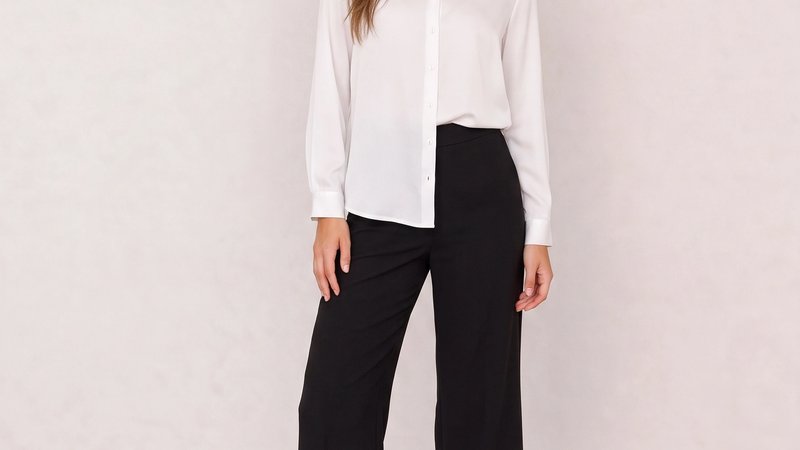
The button-down shirt, in cotton, linen, or satin. It's the most versatile piece on this list — worn tucked with trousers for the office, unbuttoned over a knit for weekends. A crisp collar that holds its shape without stiffening the whole shirt is the giveaway of a well-made one.
Cable-knit and ribbed sweaters, ideally in ivory or a muted jewel tone. Texture does a lot of the visual work that logos would otherwise be doing — a cable-knit polo reads as old money in a way a plain cotton polo doesn't, because the knit pattern implies craft.
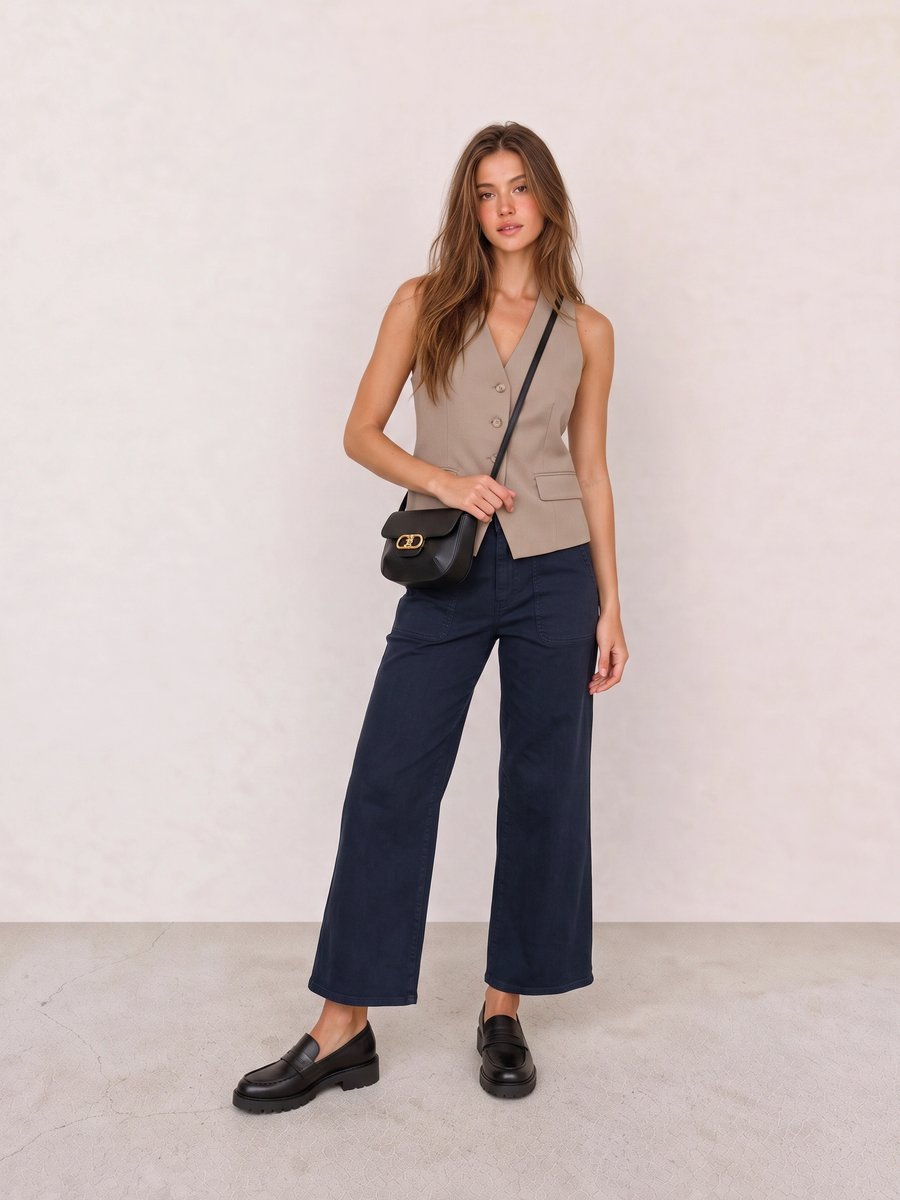
The waistcoat or button-front top, worn as outerwear rather than under a blazer. This is one of the more current 2026 additions to the formula — it gives structure without the formality of a full blazer, and it works equally over trousers or a mini skirt.
Plaid or pinstripe tailored blazer. This is the one piece where pattern is not just allowed but expected — plaid signals heritage tailoring specifically, in a way a solid blazer can't. Keep it to one patterned piece per outfit, though; two patterns competing reads as costume.
Leather loafers, in black, burgundy, or tan. Loafers do more for this aesthetic than any other shoe because they're inherently unfussy — no laces, no straps, nothing that reads as trying. A lug sole on the loafer is the 2026 update that keeps them from looking dated.
A structured leather bag — hobo, top-handle, or crossbody, in black or brown. Structure matters more than brand here; a bag that holds its shape without a logo in sight does the aesthetic's job better than a monogrammed one.
The pleated mini skirt, in gray or plaid. It's the one skirt silhouette that survives the transition from prep school archive photo to 2026 without looking costume-y, because the pleats keep the movement controlled rather than swingy.
How to Dress Old Money: The Styling Rules That Matter
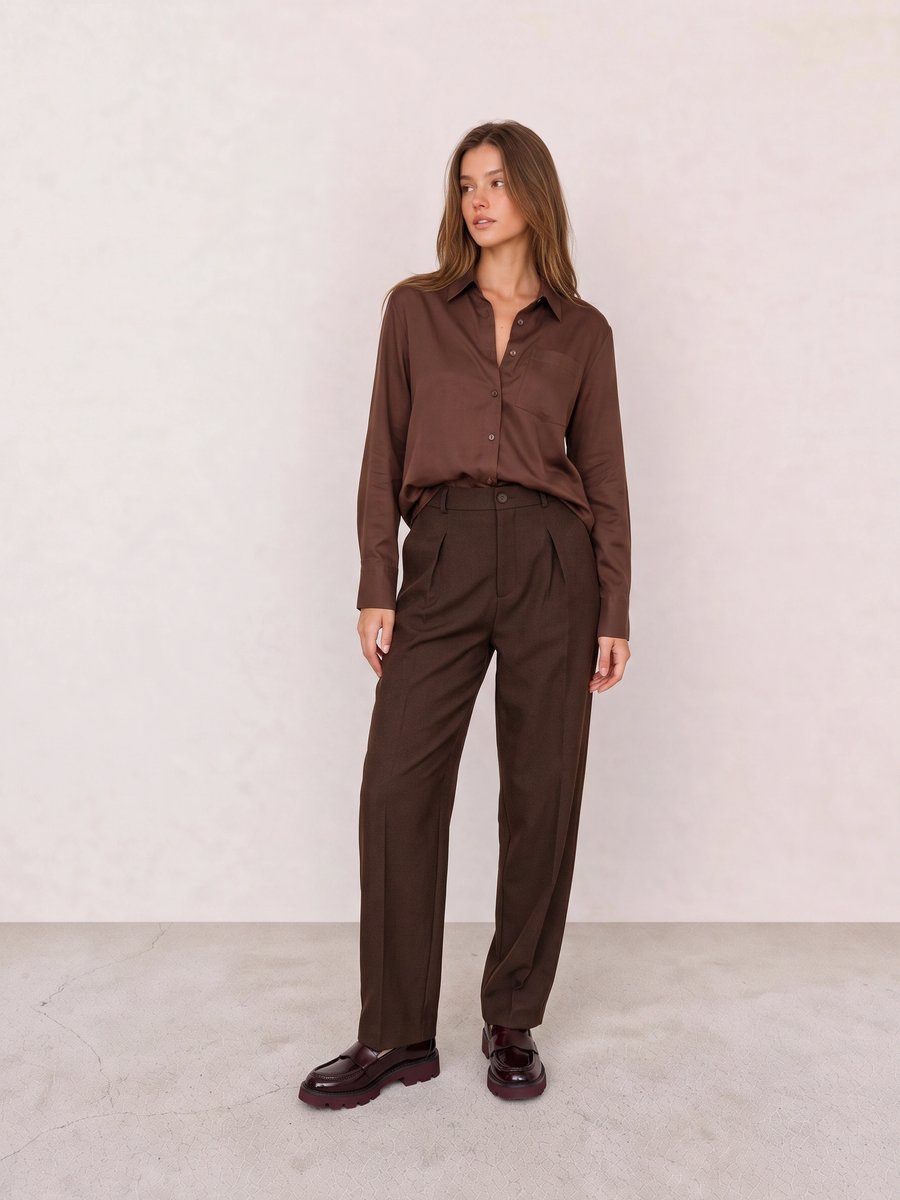
Limit the palette to four colors per outfit, drawn from navy, cream, camel, burgundy, charcoal, or black. This isn't an aesthetic preference — a tighter palette is what makes an outfit read as considered rather than assembled. The moment a fifth unrelated color enters, the eye stops reading tailoring and starts reading mismatch.
Only one patterned piece per outfit — plaid, pinstripe, or check, never combined. The pattern is meant to be a texture signal, not a statement; stacking two patterns pulls focus away from the tailoring and toward the print, which flips the entire hierarchy of the look.
Fit the shoulder seam and let the leg stay wide. A blazer or shirt that fits at the shoulder signals tailoring even if everything below is relaxed — this is why wide-leg trousers still read polished rather than sloppy: the structure lives at the top of the outfit, and the volume lives at the bottom.
Choose leather accessories over hardware-heavy ones. A quilted chain bag or a buckled heel adds detail without adding logo — the hardware itself becomes the only embellishment the outfit needs, which is why old money accessories tend to have exactly one metal detail, never several.
Common Old Money Styling Mistakes
Visible logos and monograms. The entire premise of the aesthetic is quality without announcement — a logo belt or monogrammed bag undoes the effect immediately, no matter how expensive the rest of the outfit is.
Head-to-toe tennis whites with a pearl necklace and a headband. This is the TikTok-era shorthand version of old money, and it reads as costume rather than closet — real old money dressing is built from office and weekend pieces, not a single sport-specific uniform.
Fast-fashion tailoring that doesn't actually fit. A blazer that gaps at the button or trousers that break wrong at the ankle undercut the whole point — the aesthetic depends on fit reading effortless, and cheap tailoring makes that impossible no matter the color palette.
Chunky sneakers or anything with a visible logo on the shoe. Avoid this specifically: a loafer or block heel keeps the outfit in its lane, while a branded sneaker instantly shifts the read toward streetwear, no matter what's happening above the ankle.
Old Money Outfit Ideas to Copy
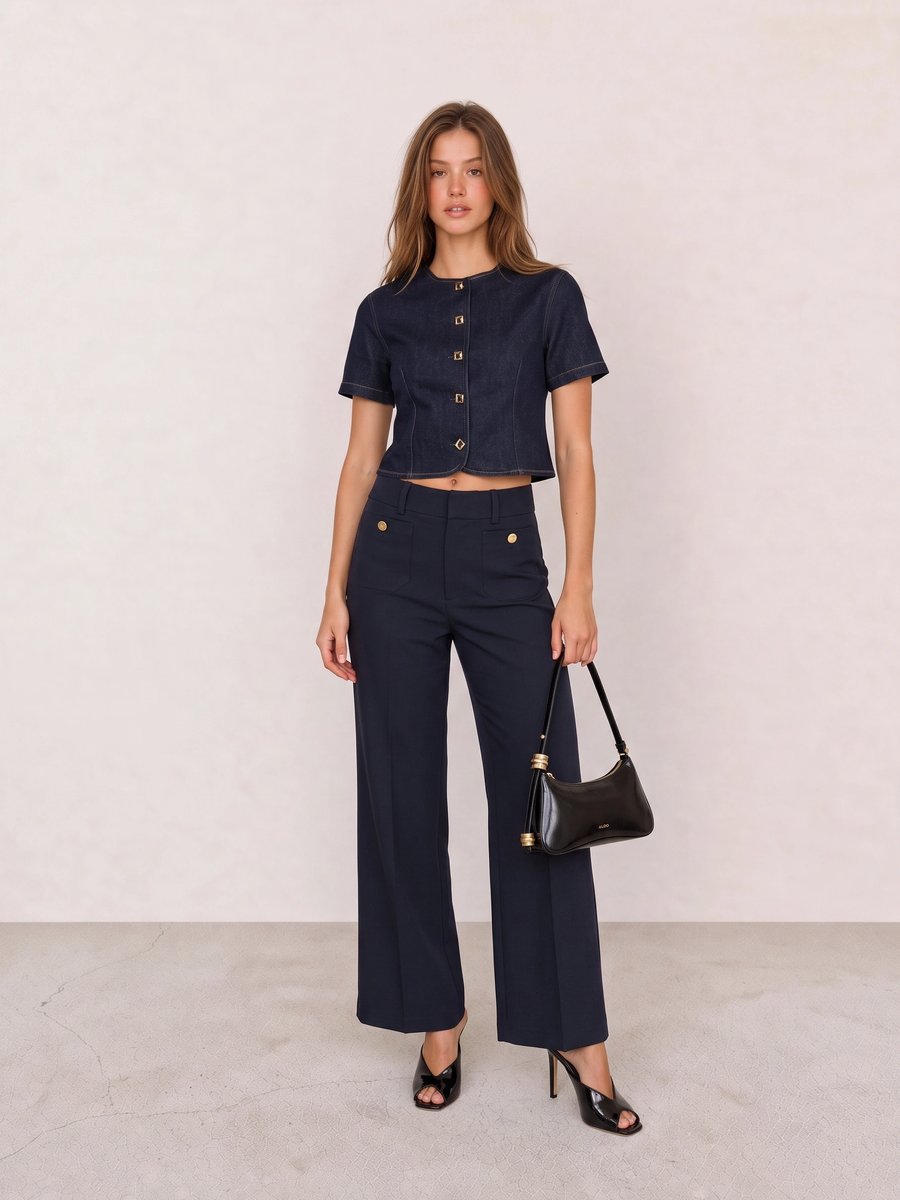
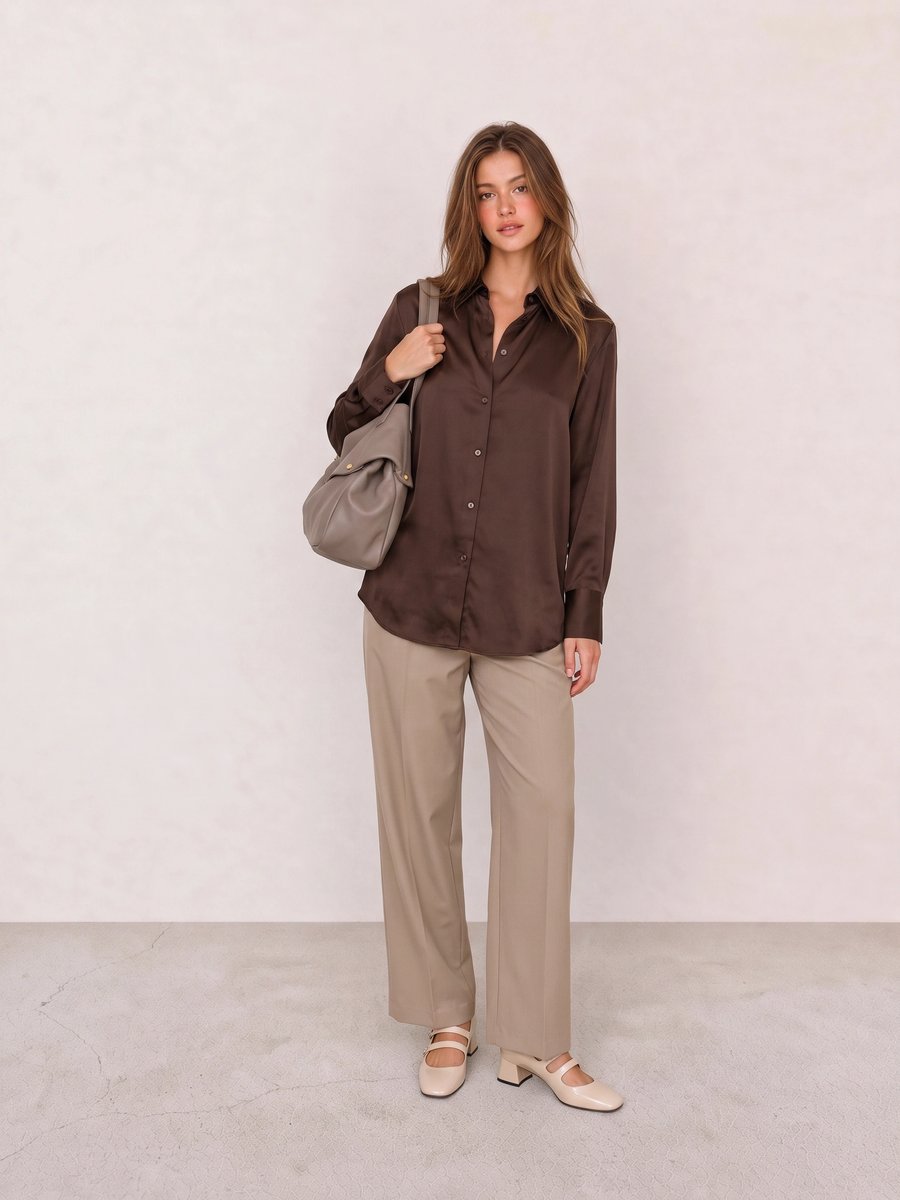
These nine looks, pulled from the full 20-piece edit, show the range the aesthetic actually allows — from office tailoring to weekend knitwear.
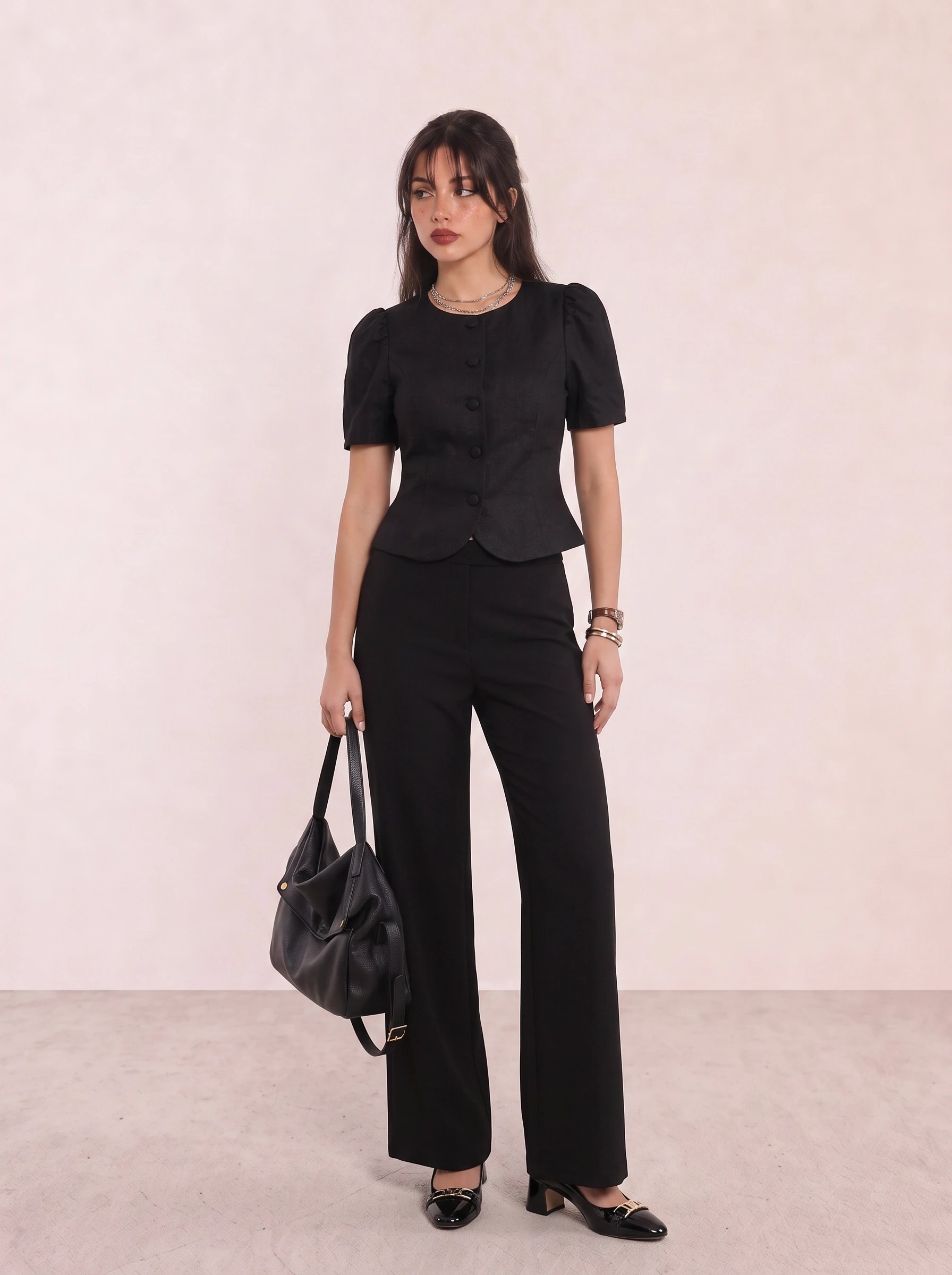
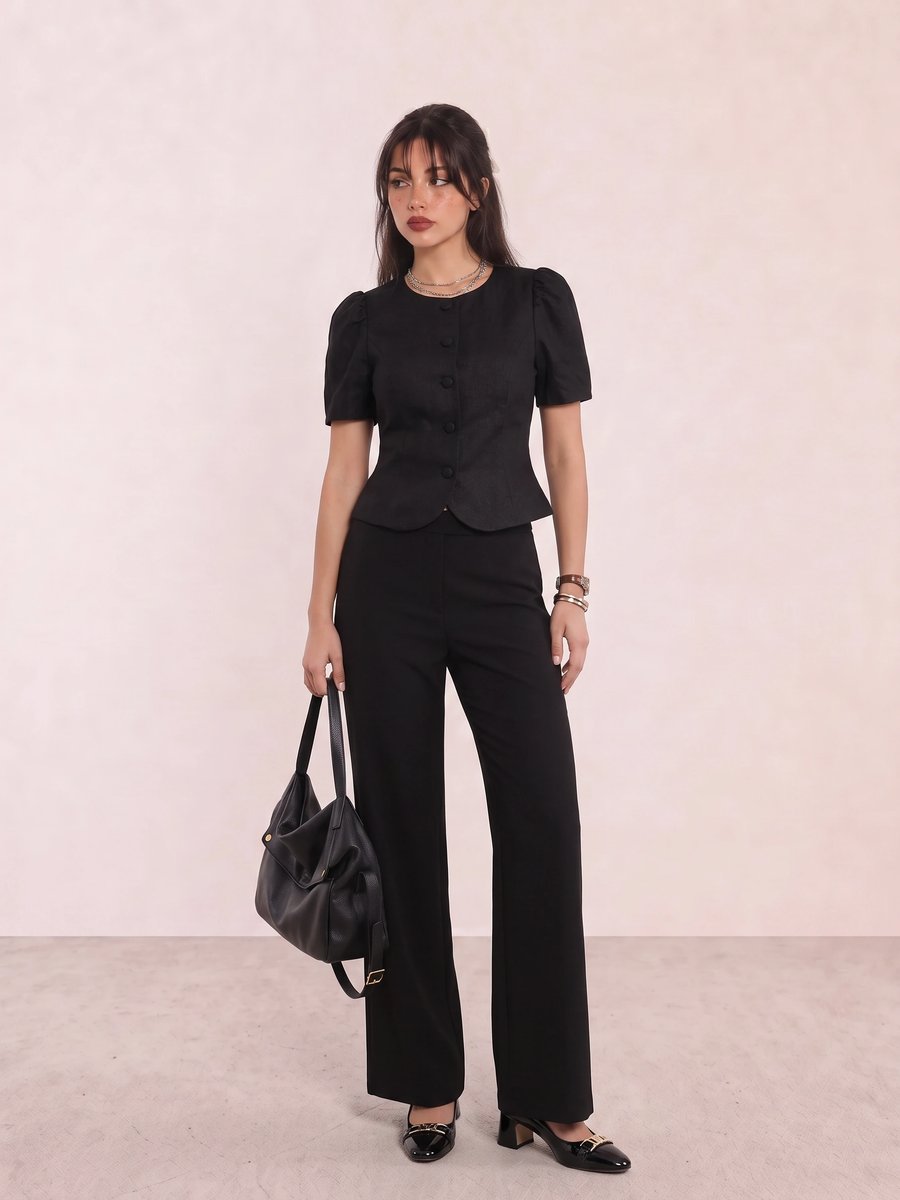
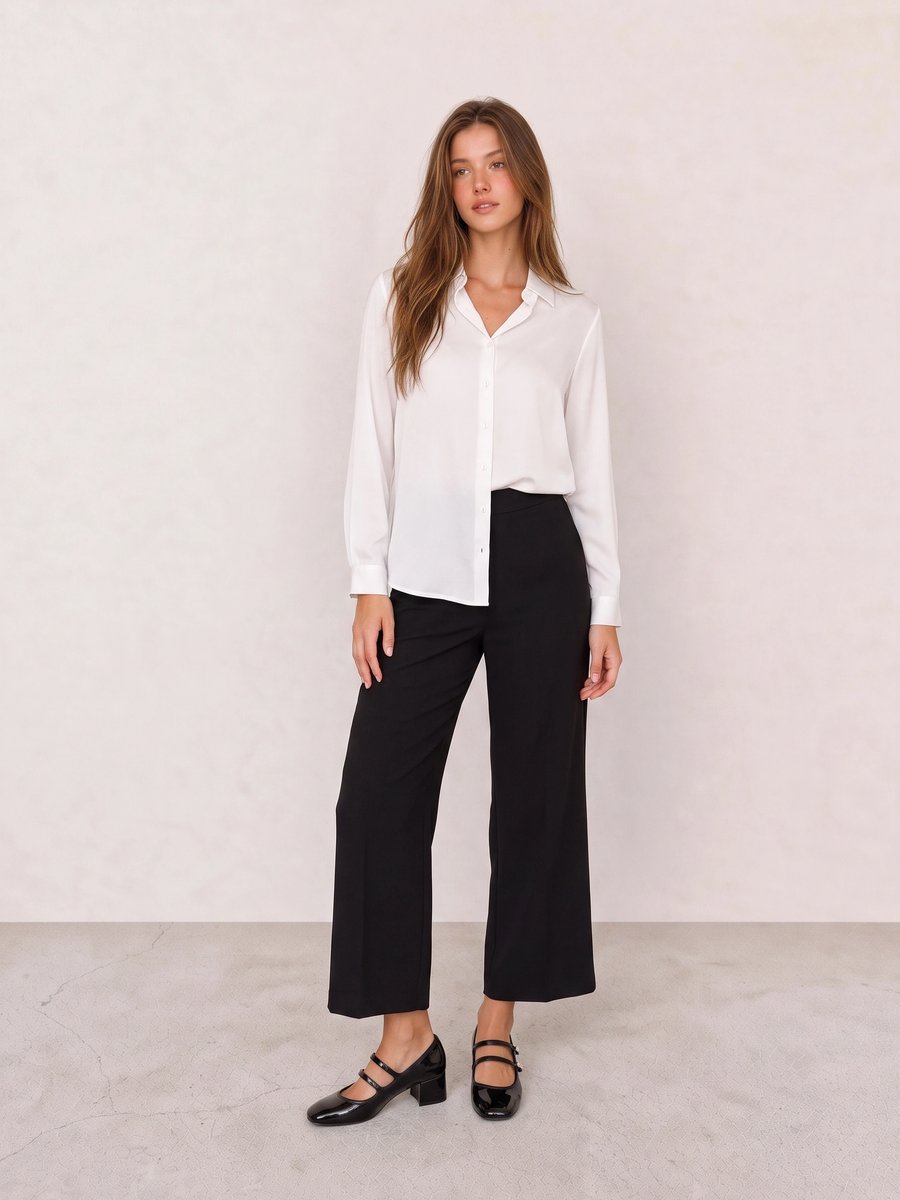
The mechanism here is monochrome tailoring. A single black tone across the puff-sleeve blouse and wide-leg trousers removes any competing color decision, so the eye reads silhouette instead of pattern. The formula: puff-sleeve blouse, wide-leg trouser, block-heel pump, hobo bag — swap the puff sleeve for a plain cuff and the outfit loses its only soft detail. Without that sleeve volume, this would read as corporate rather than old money.
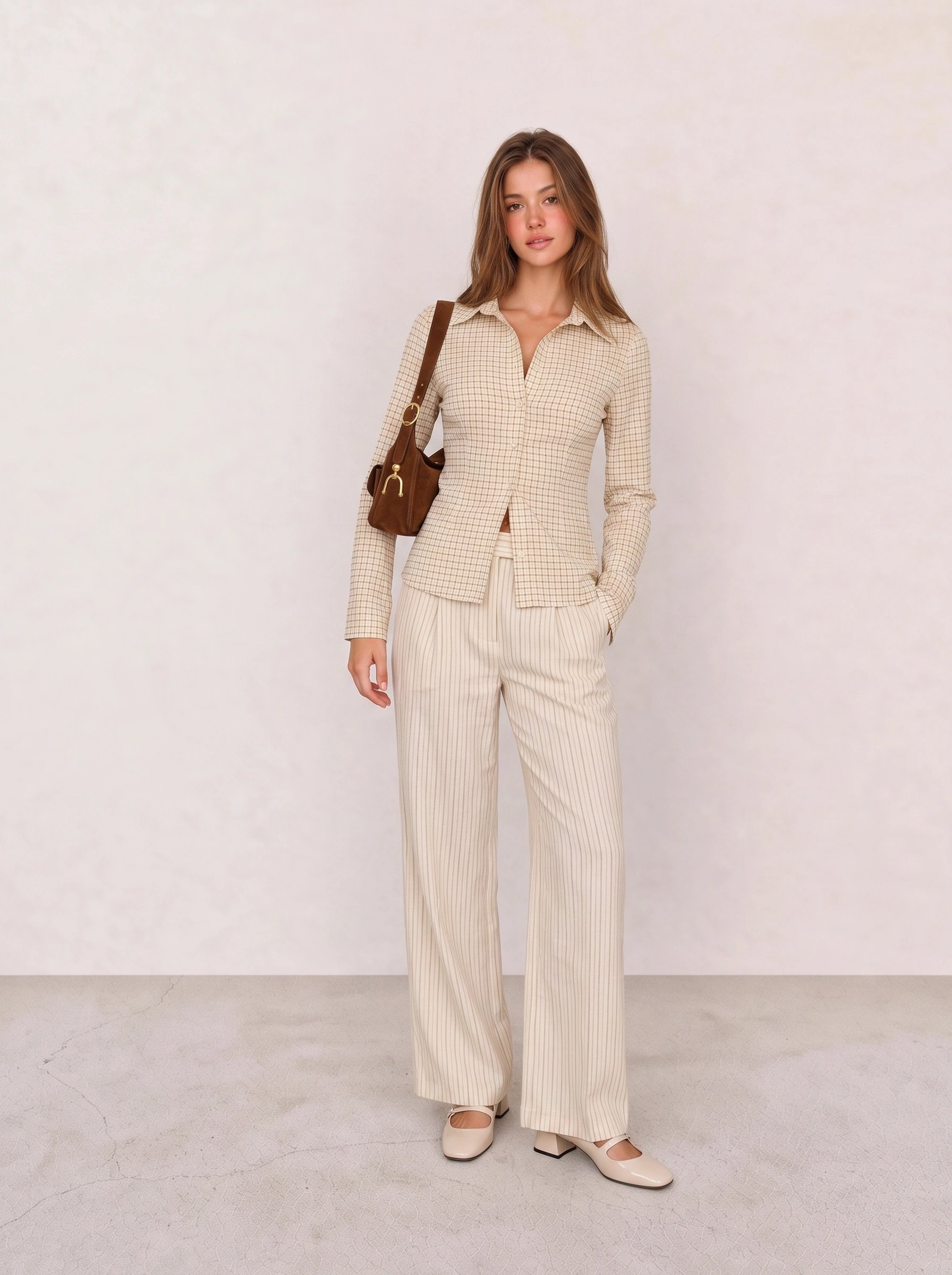
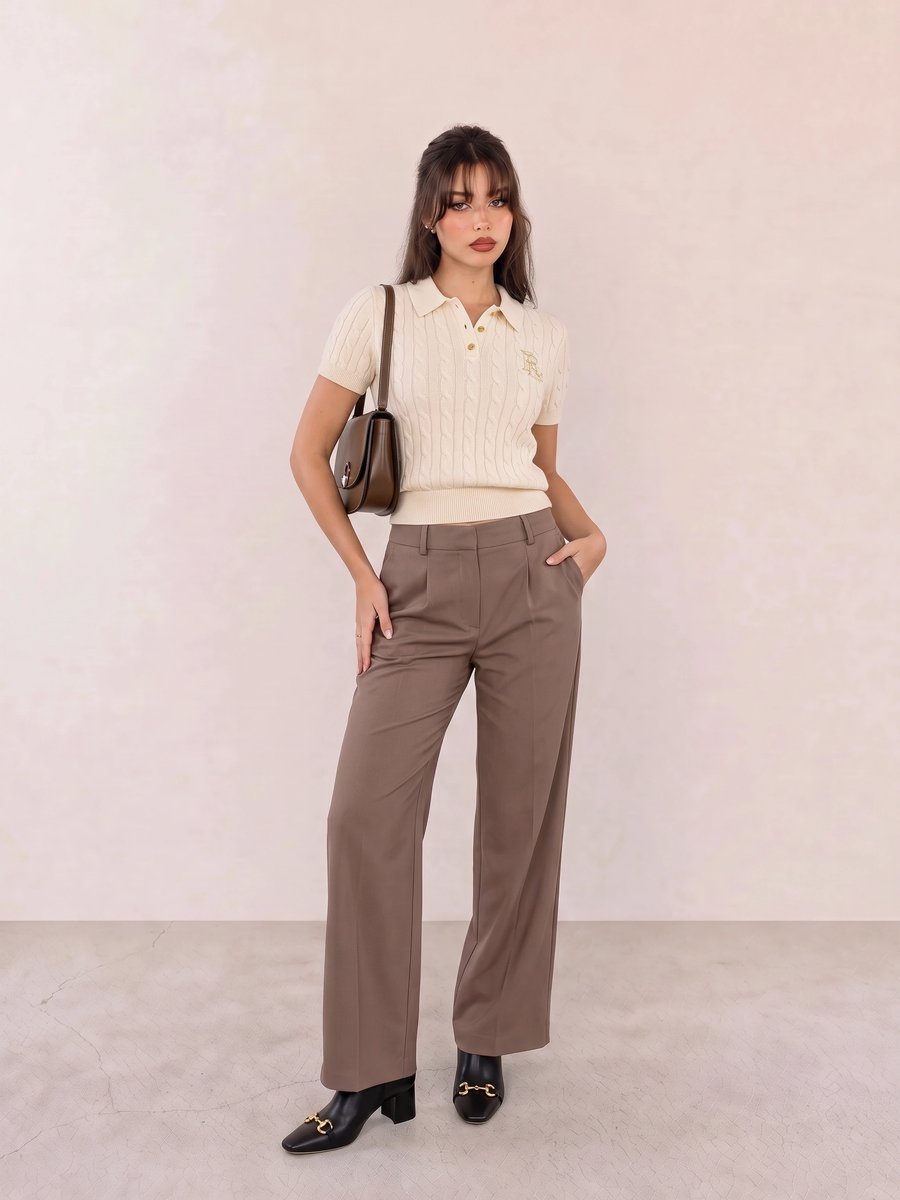
This cream-on-cream pairing is the easiest outfit on this list to start with if you're new to the aesthetic — the tonal palette does almost all the work, so you don't need to solve a color-matching problem to make it read correctly. Where to wear it: a Saturday spent between a farmers market and an afternoon at someone's parents' house, the kind of day that calls for looking put-together without looking dressed up.
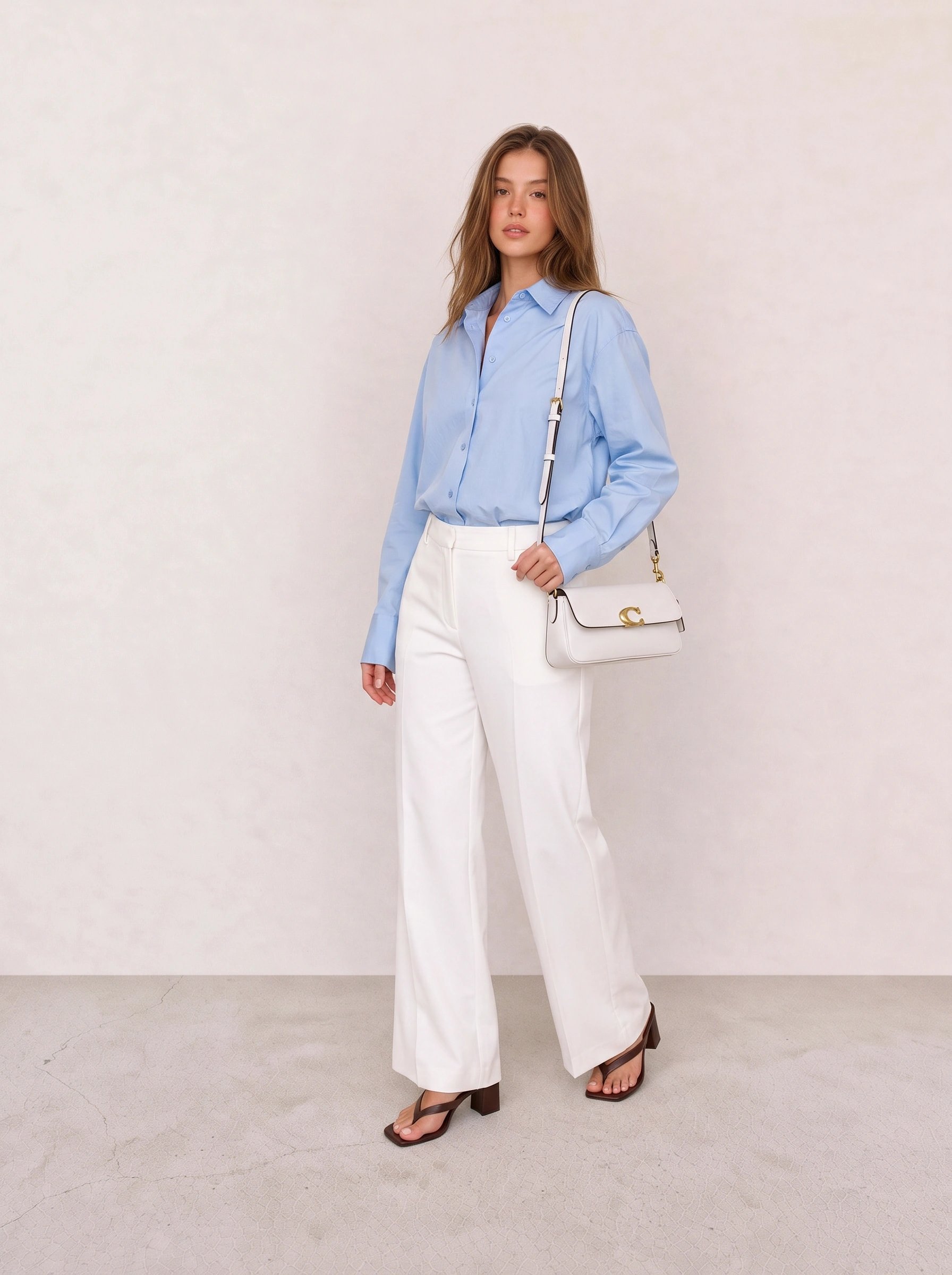
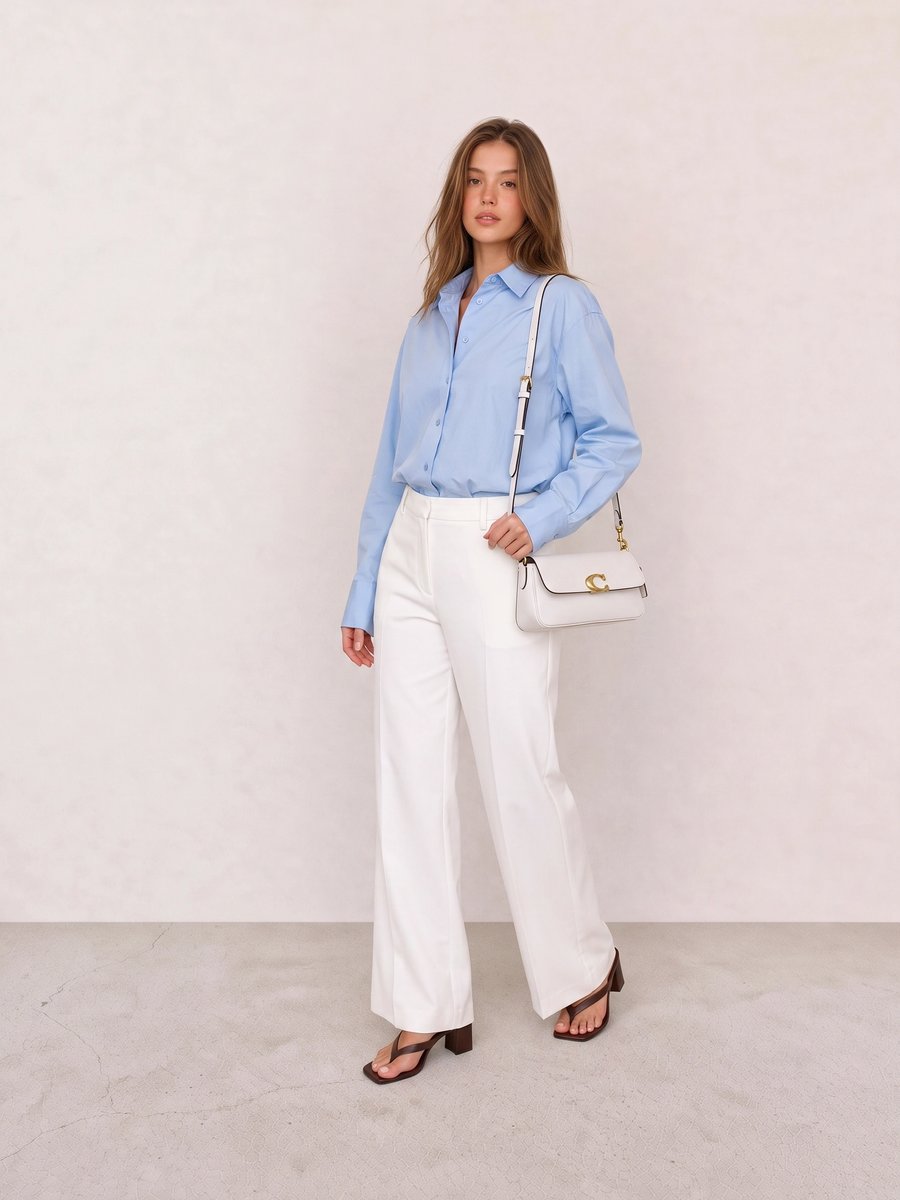
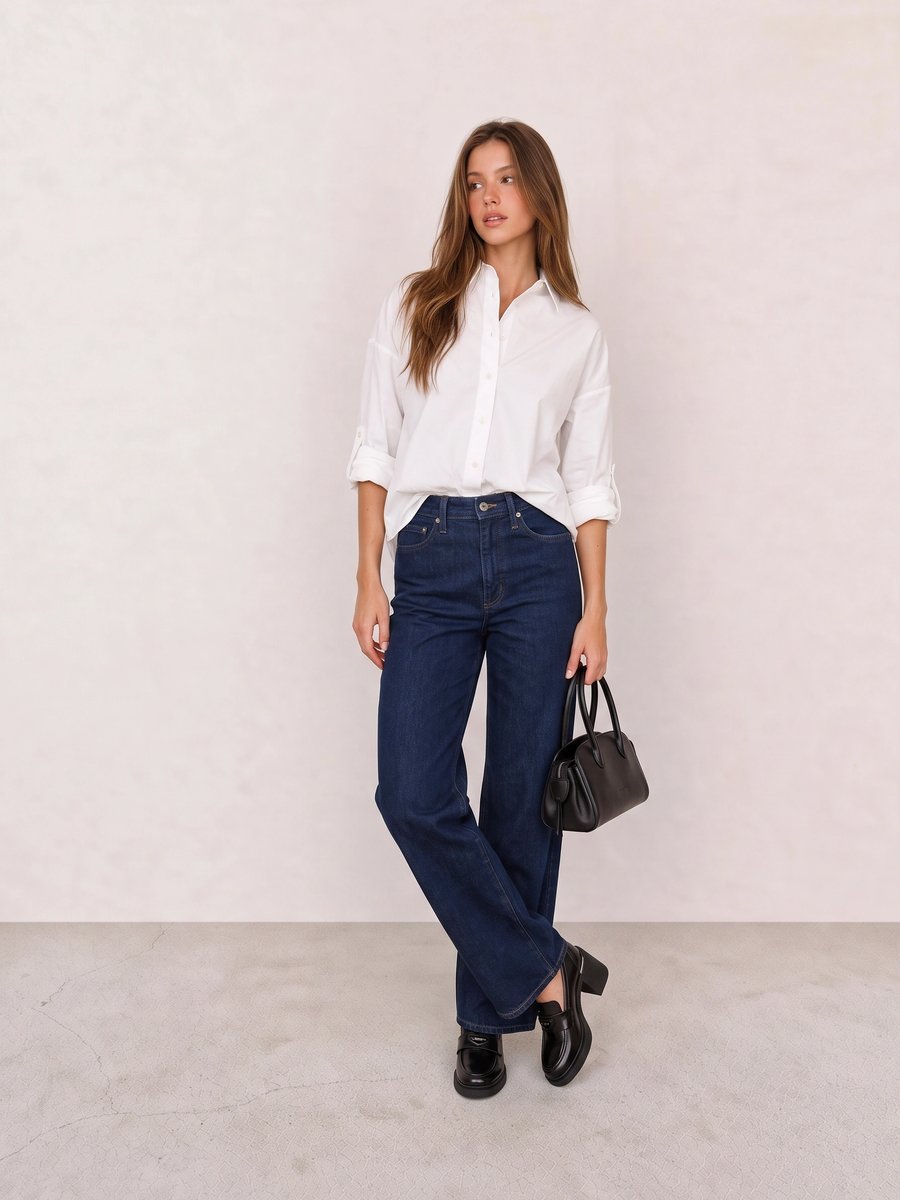
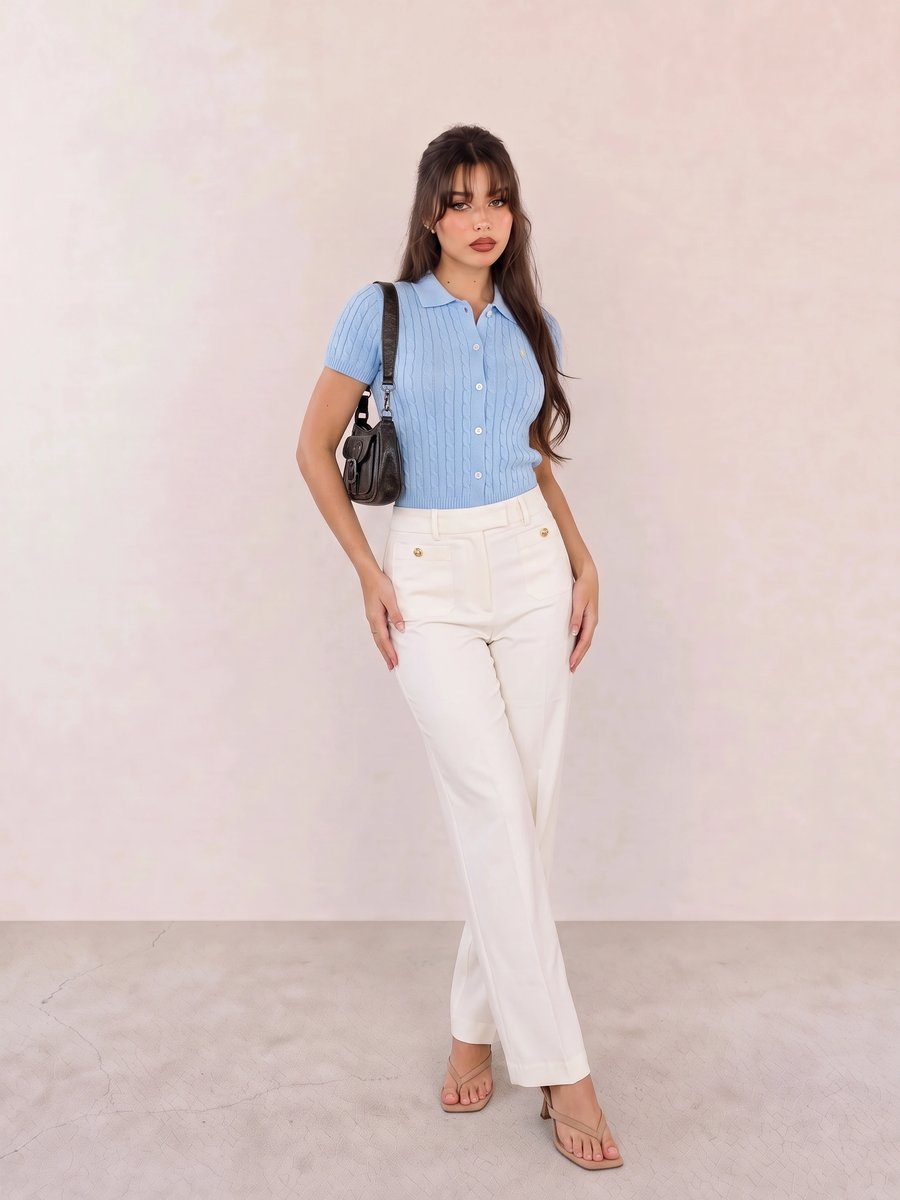
Styling tip: if you only own one piece from this look, start with the oversized light blue button-down — it carries the whole outfit, since the oversized fit is what keeps a plain shirt-and-trouser combination from reading like an office uniform. The blue slingback kitten heel is doing more work than any bag could here; it's the only warm-toned note against an otherwise cool palette, and it keeps the outfit from feeling clinical.
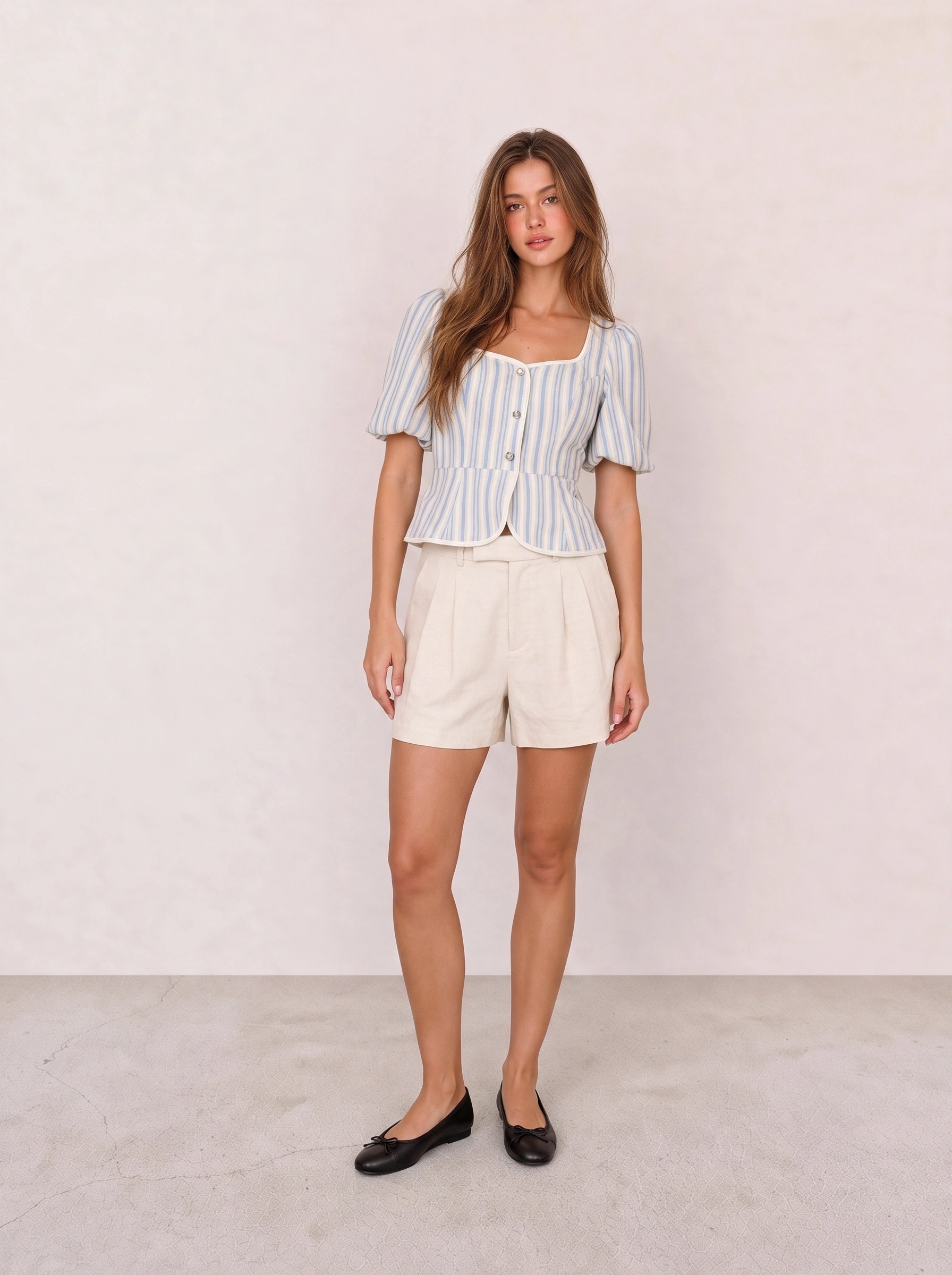
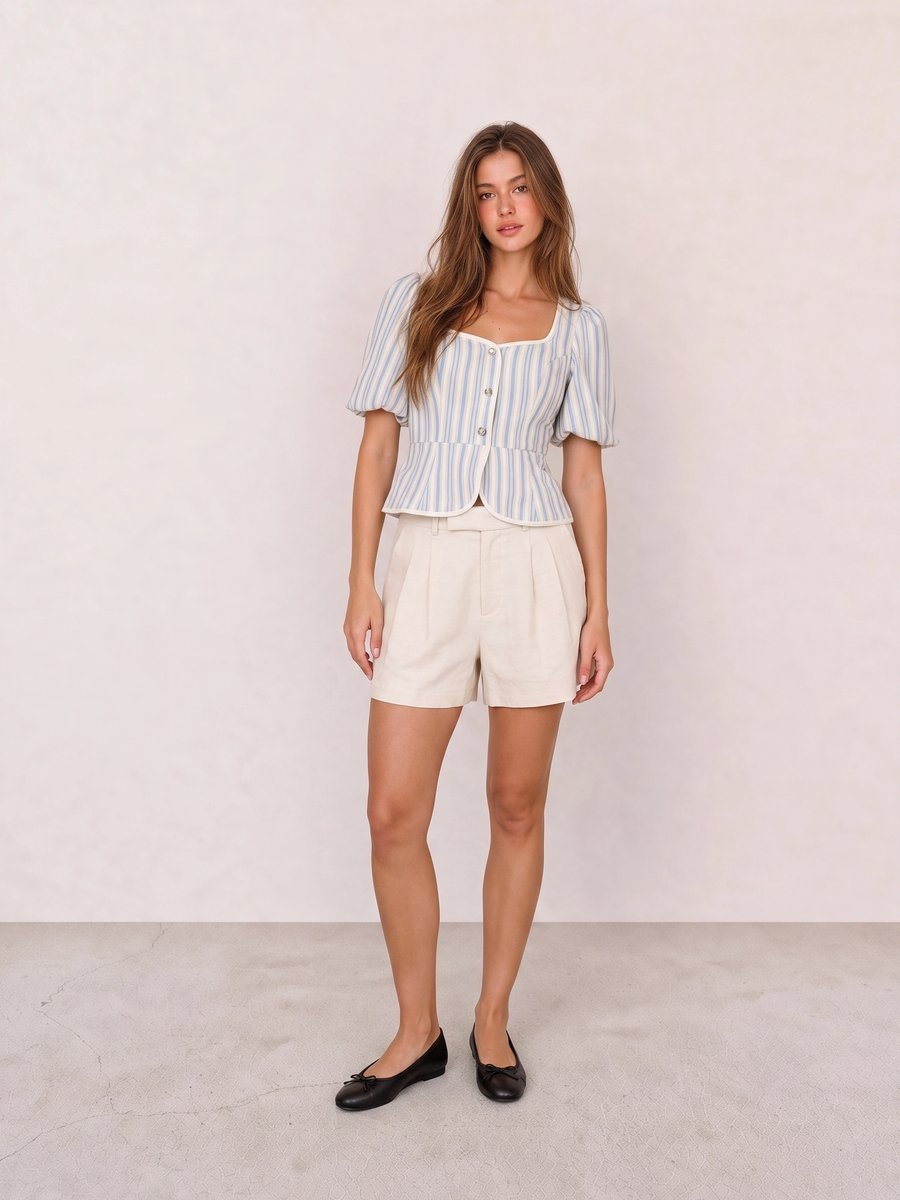
What makes this one interesting rather than a basic version of the same formula is the peplum hem on the striped puff-sleeve blouse. A peplum creates a defined waist without a belt, which matters because belts pull focus toward hardware — exactly what this aesthetic avoids. Pair it with pleated tailored shorts instead of a skirt and the proportion shifts younger without losing the tailored logic.
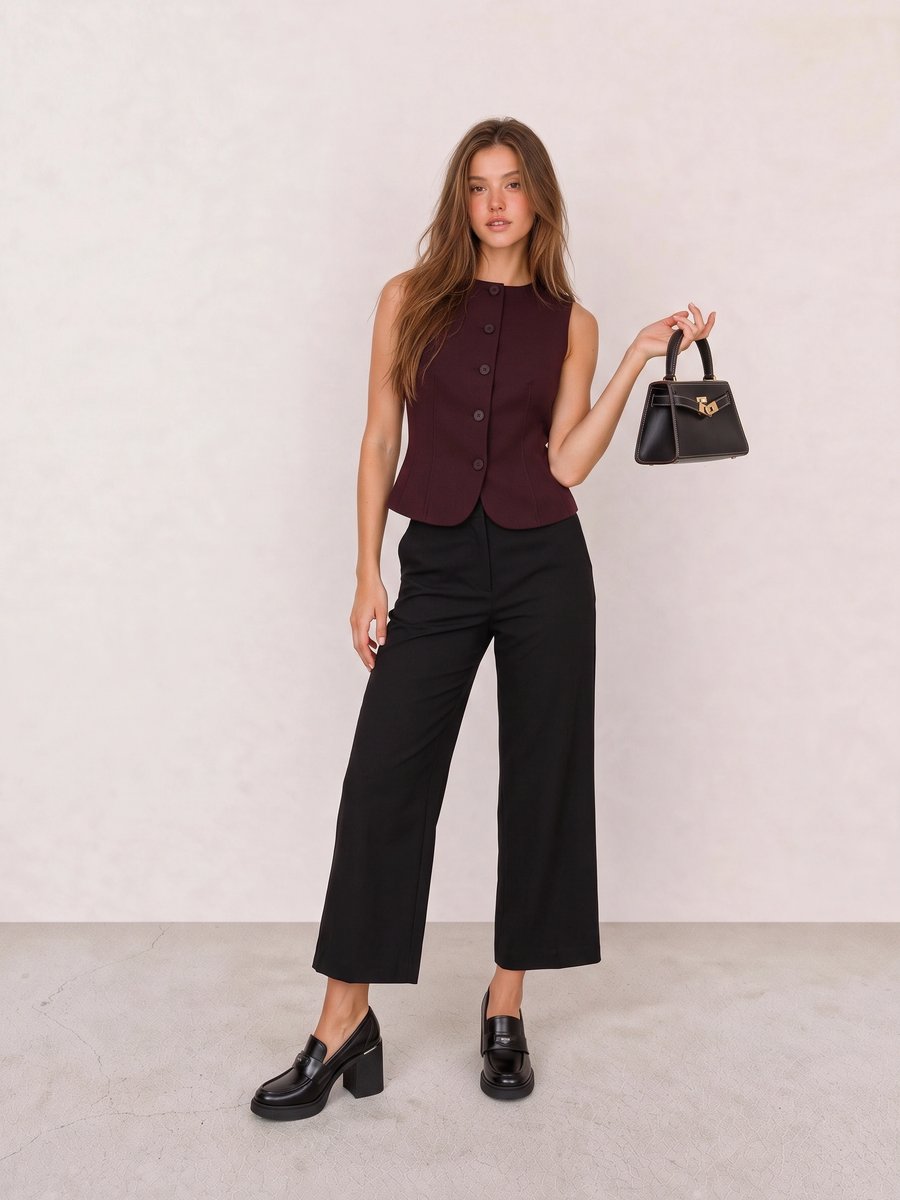
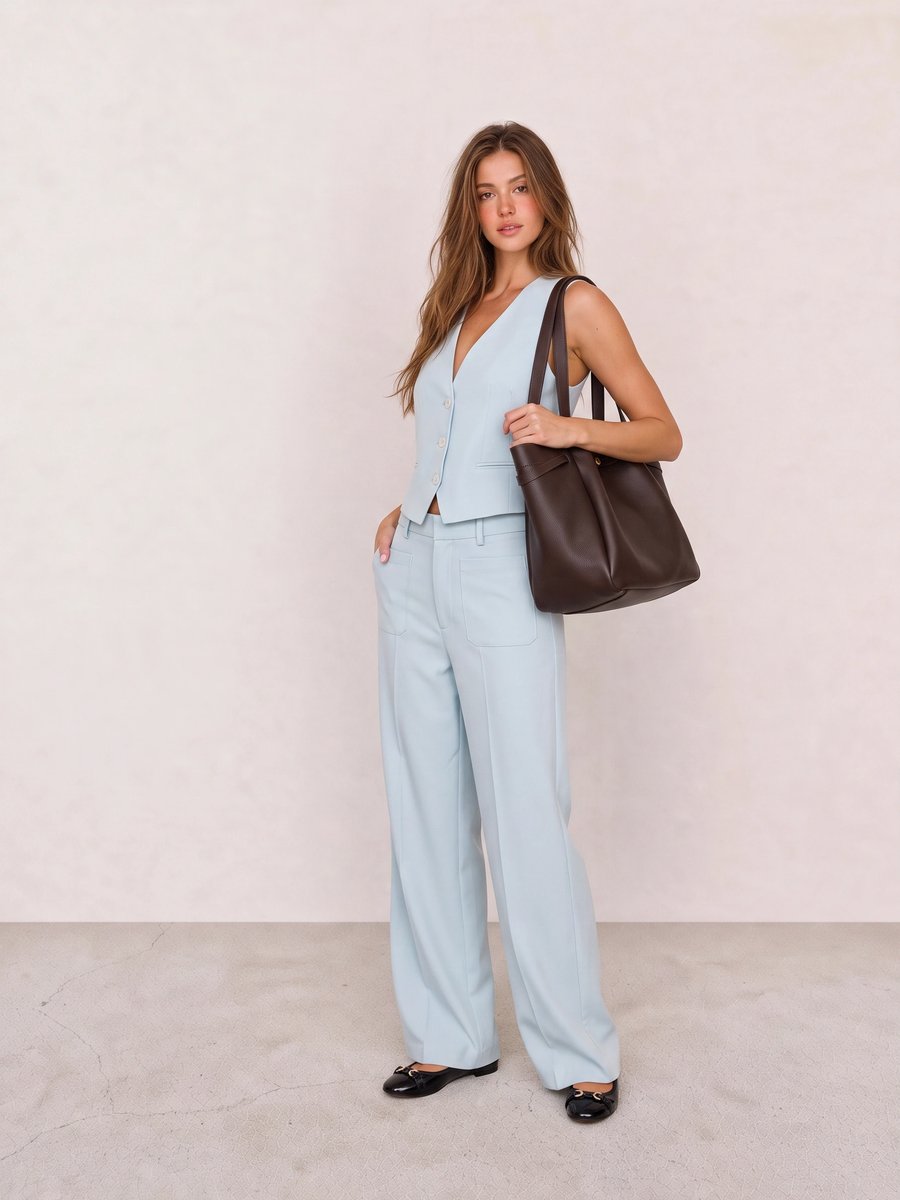
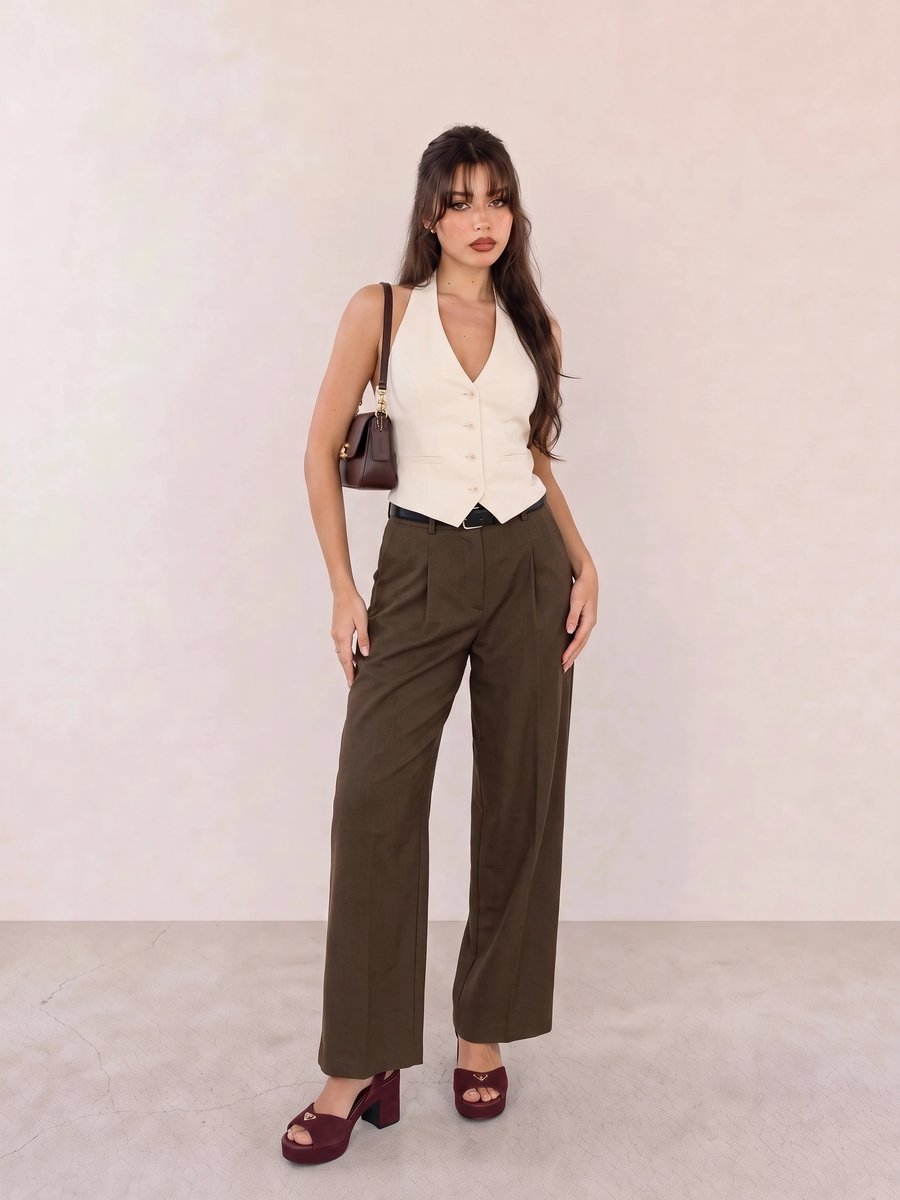
If I had to pick one outfit from this entire edit to recommend first, it's the waistcoat looks. Everything else on this list is a variation on shirt-and-trouser; the waistcoat is the piece that signals you understand the aesthetic beyond its most obvious expression.
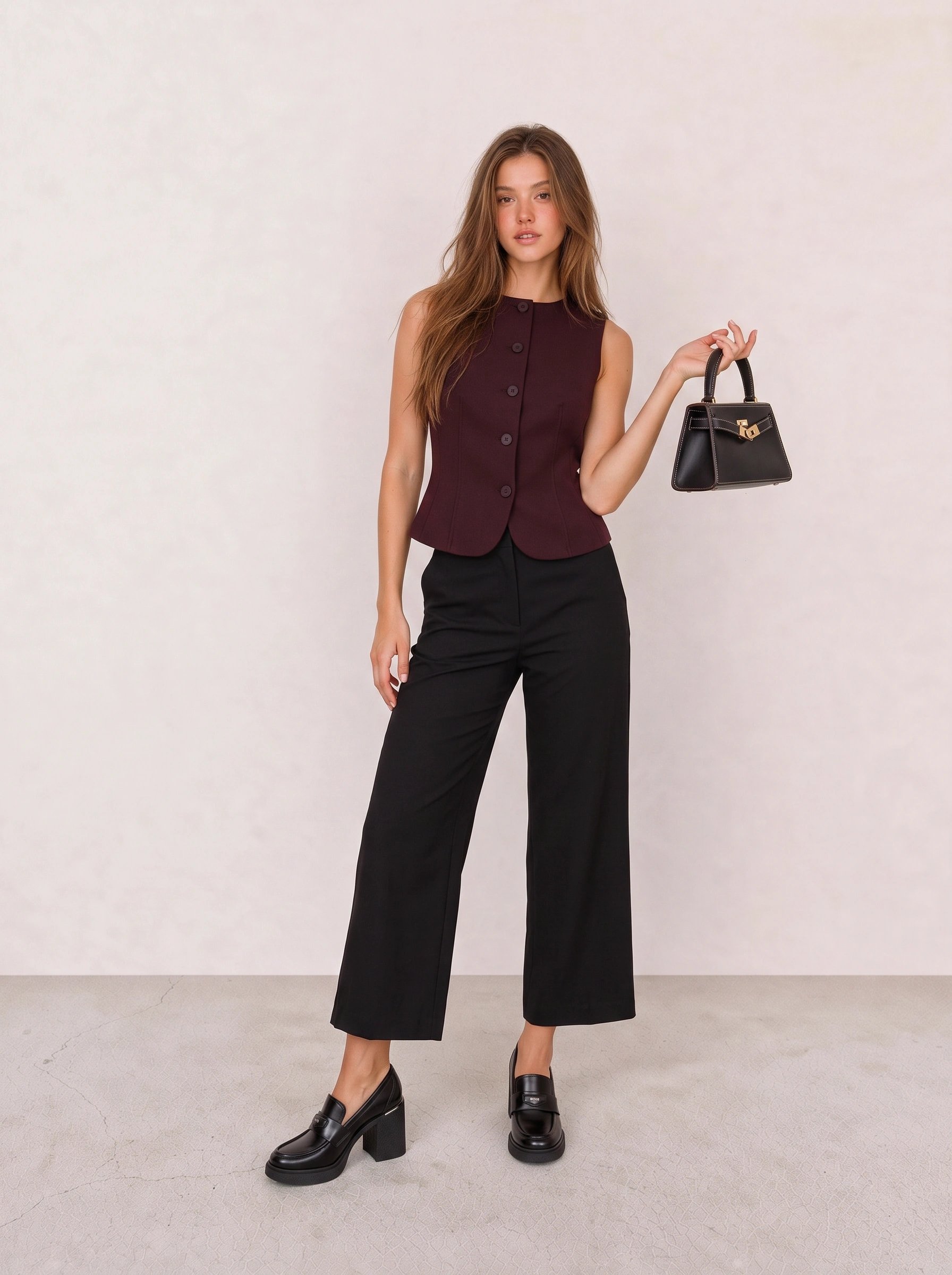
Color logic is the mechanism worth naming here: burgundy against black is a contrast pairing, not a tonal one, and it's what keeps the waistcoat and cropped trousers from reading flat. The cropped trouser hem exposes the ankle, which lengthens the leg line — but only because the waistcoat balances it with volume up top. Block-heel loafers keep the whole thing walkable for an actual workday rather than a photo.
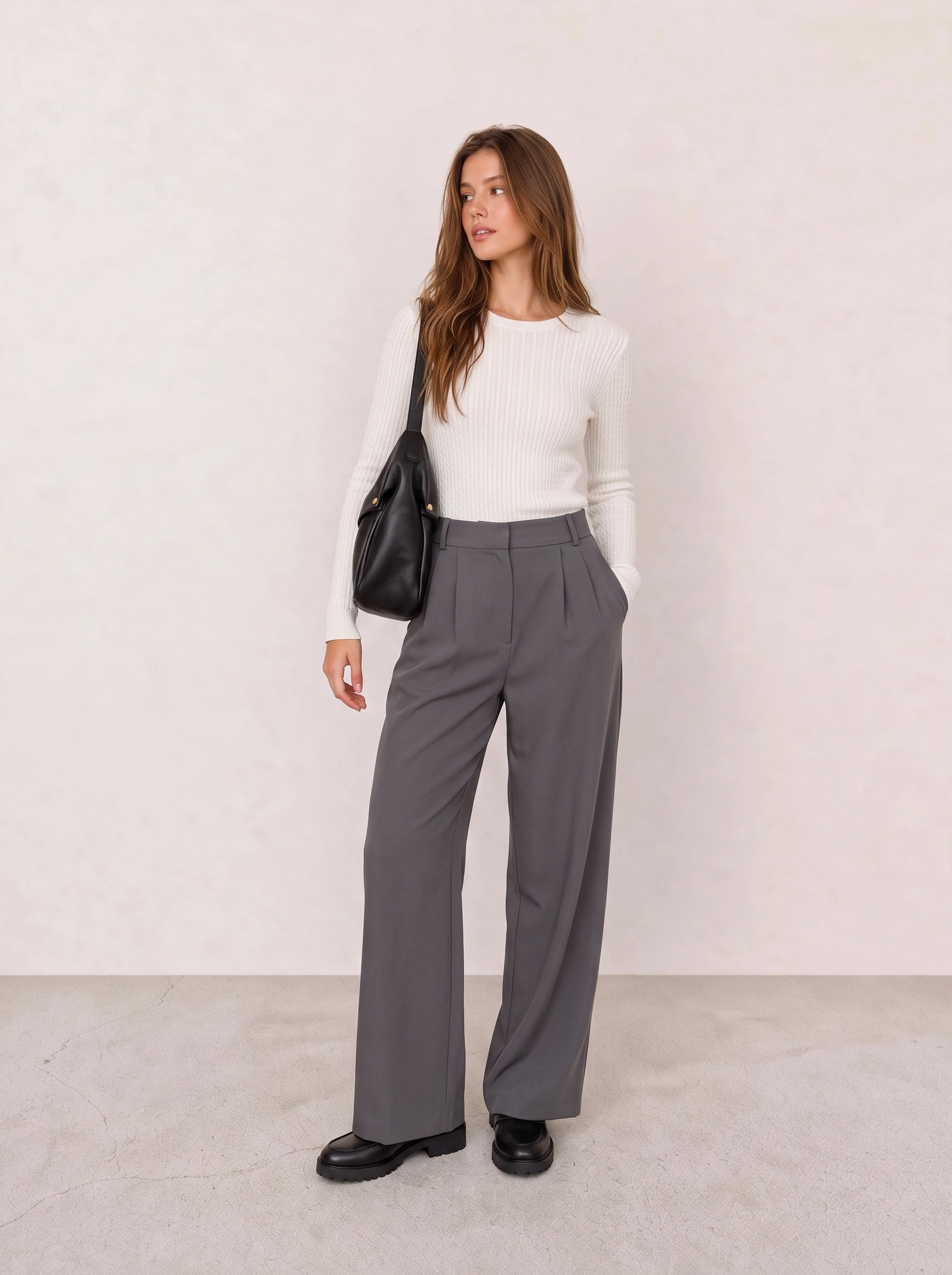
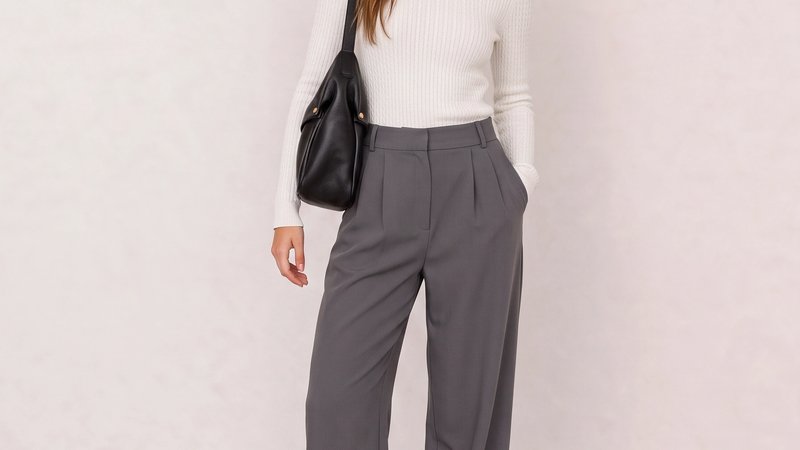
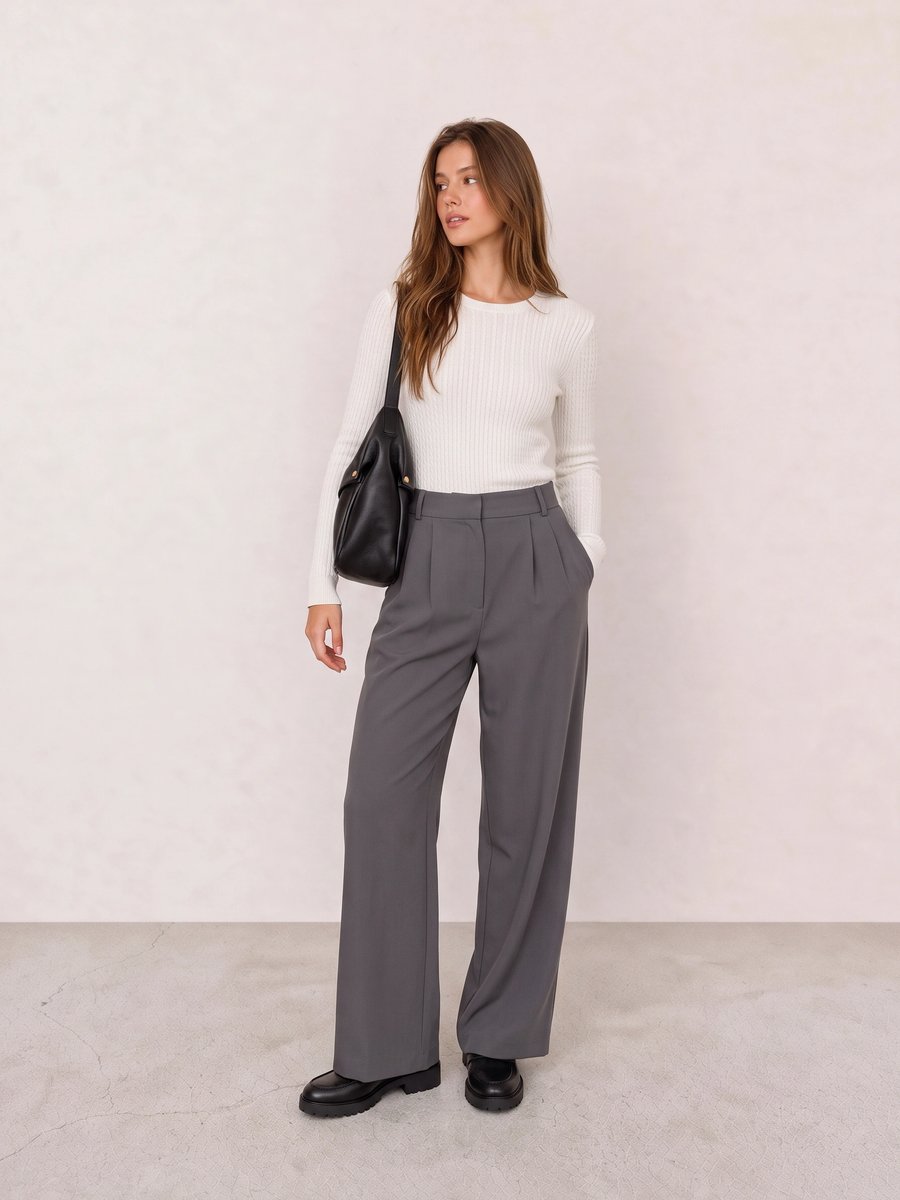
This ivory-and-charcoal combination is the most versatile outfit on this list — it moves from a Sunday library afternoon to a low-key dinner with the same pieces, just by swapping the loafer for a heeled version. The ribbed texture on the sweater is what earns it a place in this aesthetic at all; a flat-knit sweater in the same ivory would read plain rather than considered.
Worth noting: the trend is already moving away from the maximalist tennis-and-pearls version of old money toward this quieter, texture-led interpretation — fewer accessories, more attention to how the knit or the trouser actually falls.
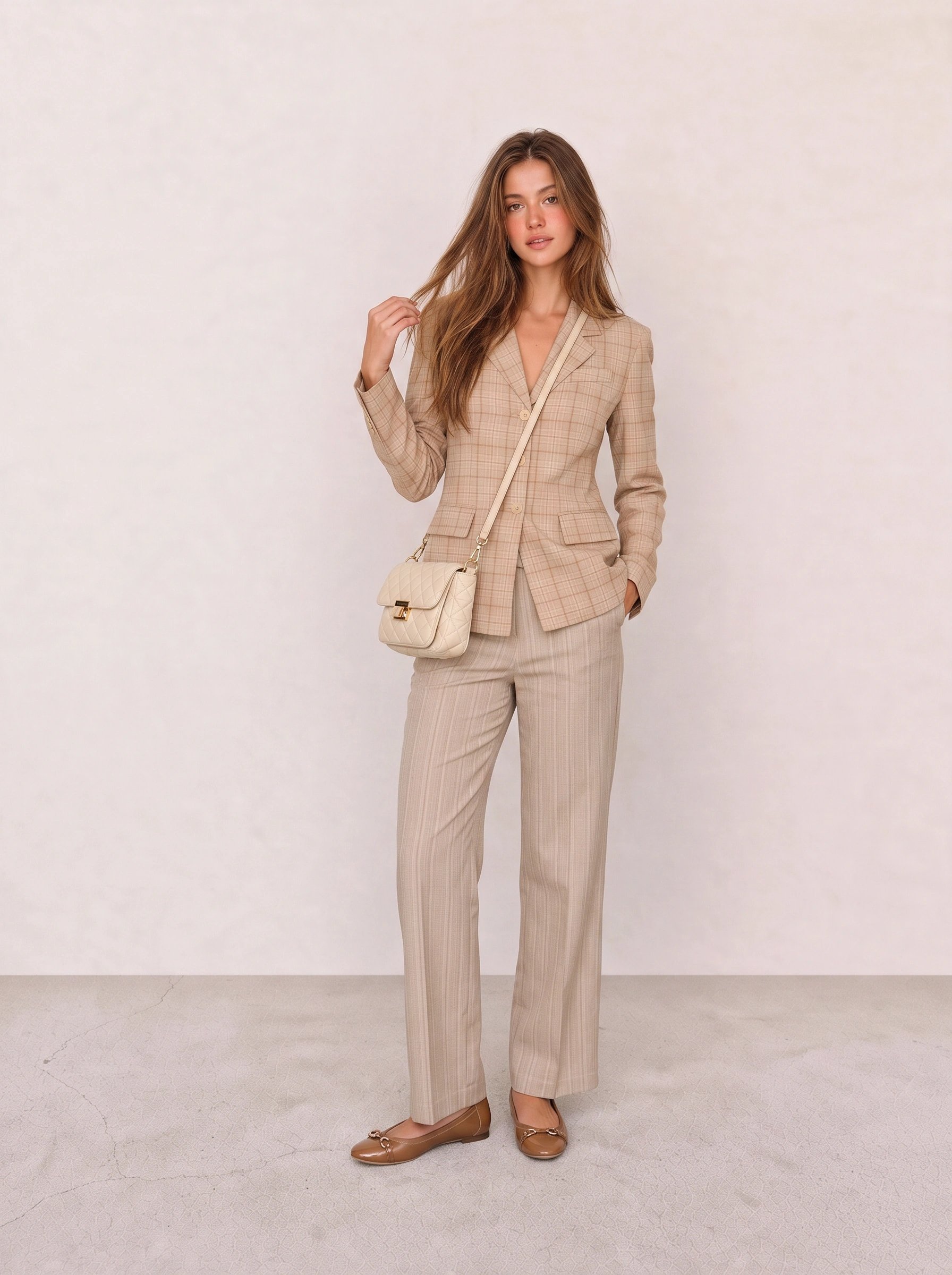
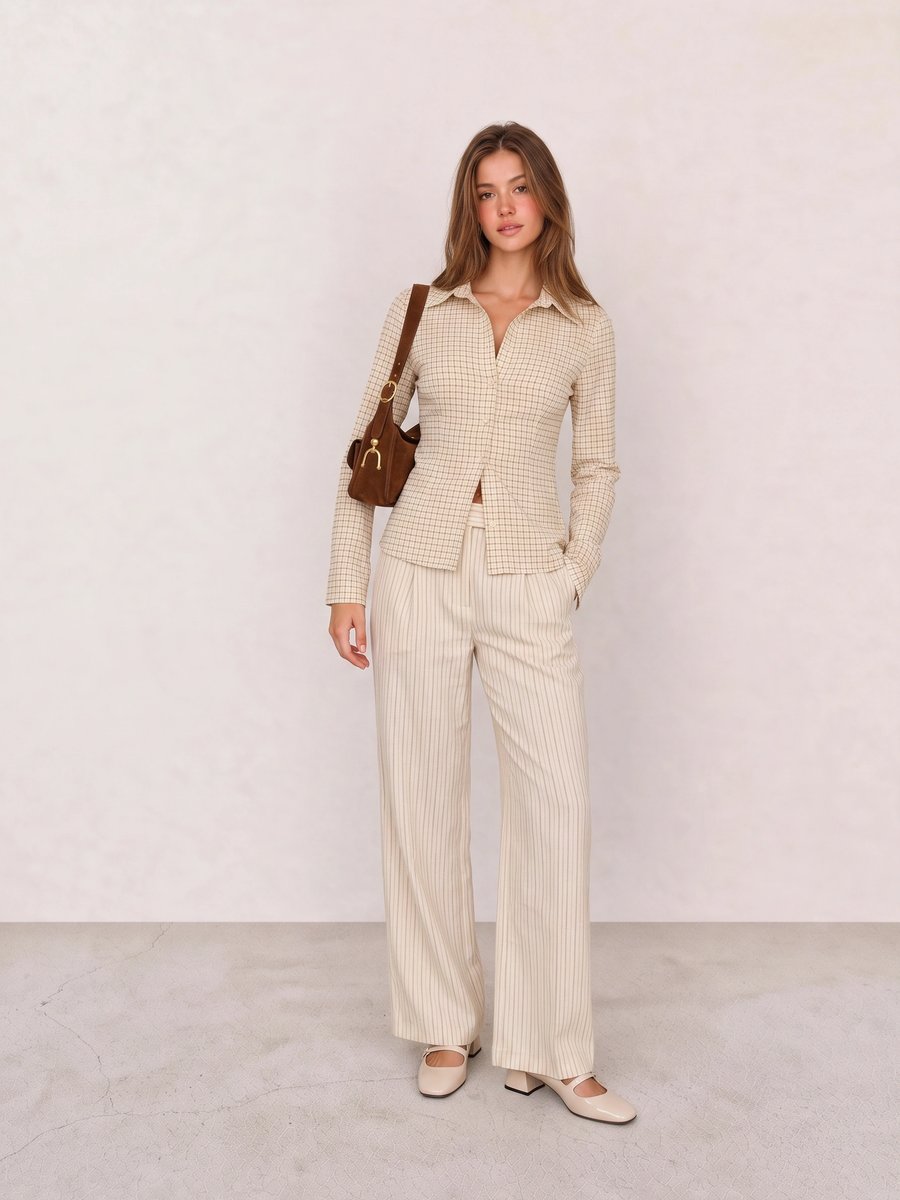
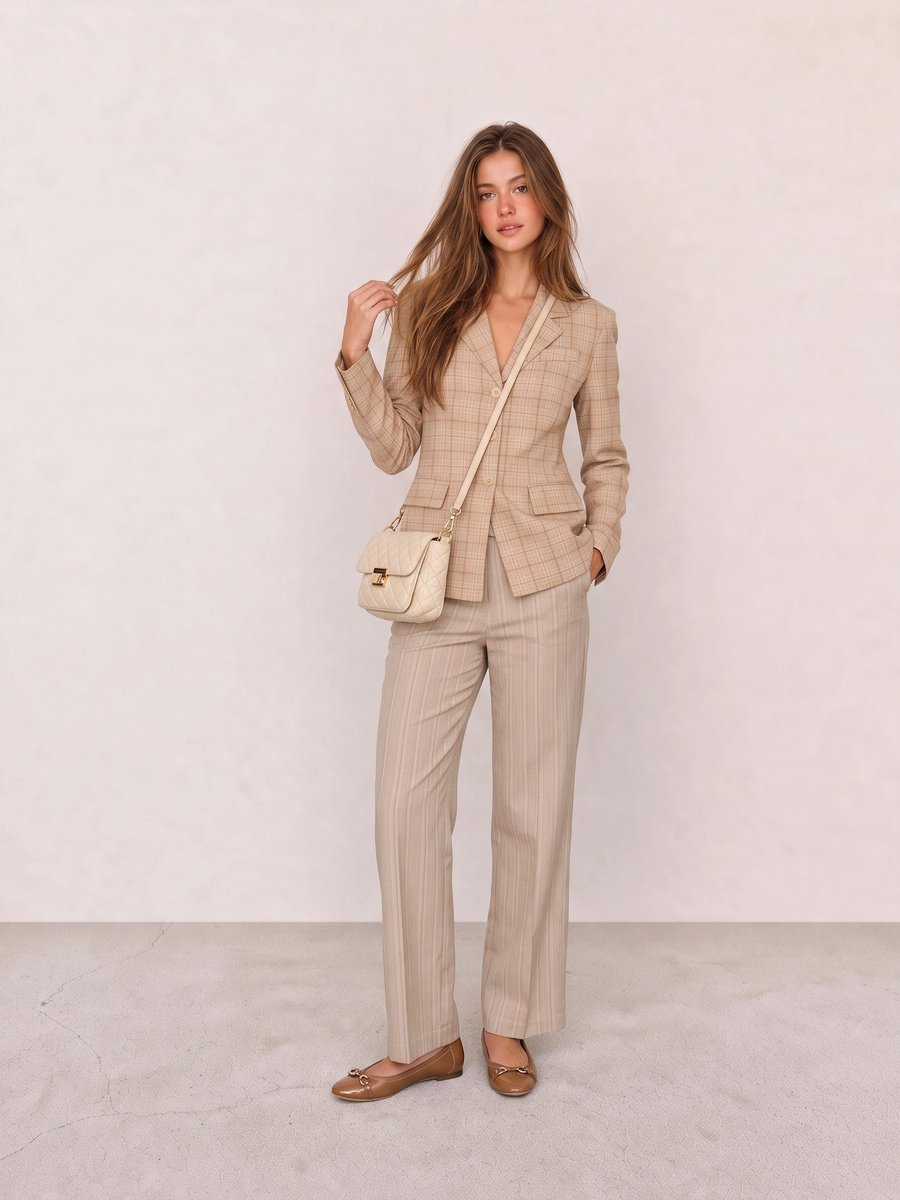
This is the one outfit on the list that breaks the one-pattern rule deliberately, pairing a plaid blazer with pinstripe trousers, and it only works because both patterns sit in the same beige family — same value, same warmth, different scale. Try this with two patterns in different color families and it collapses into visual noise; the shared tone is what holds it together.
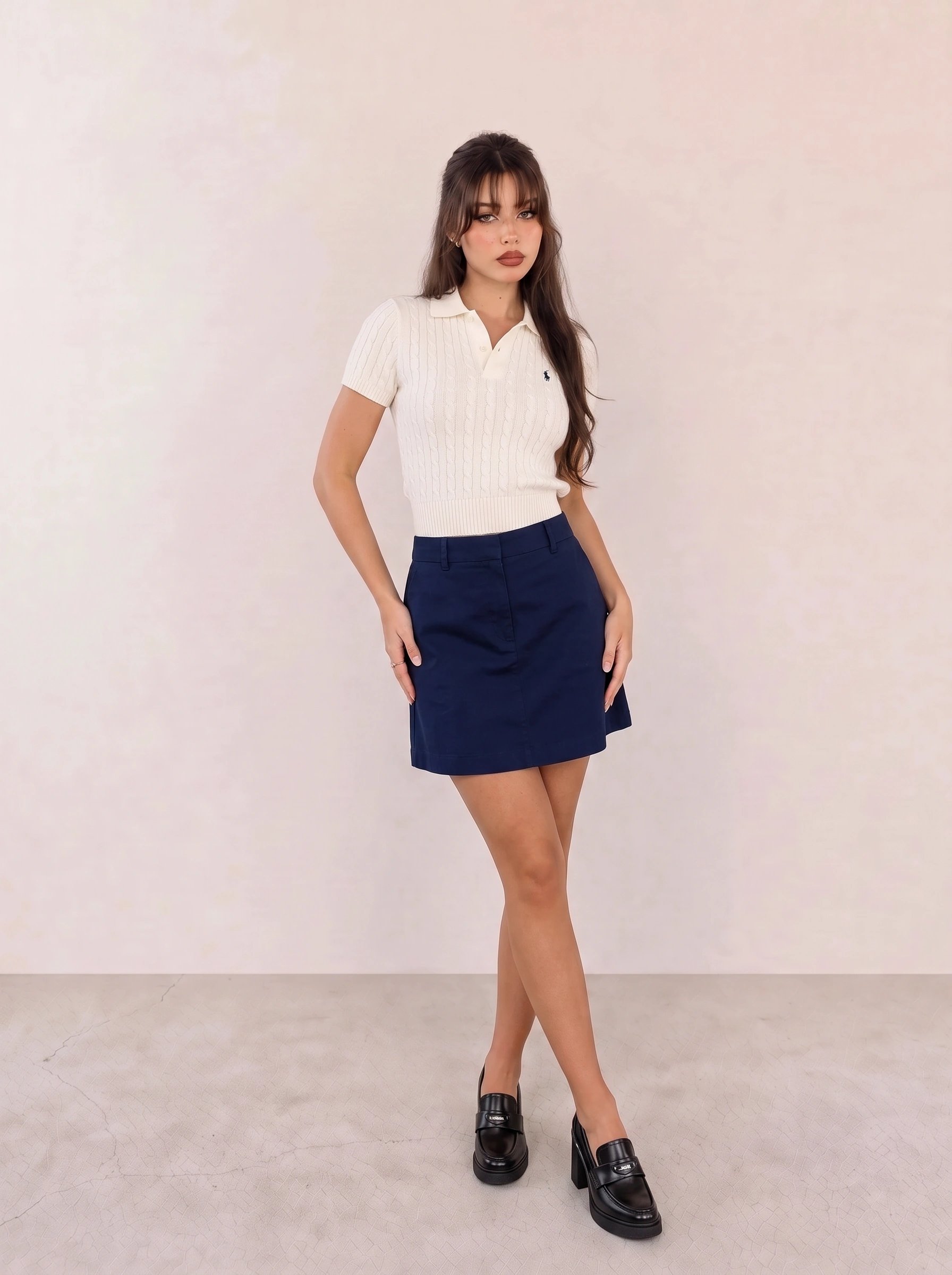
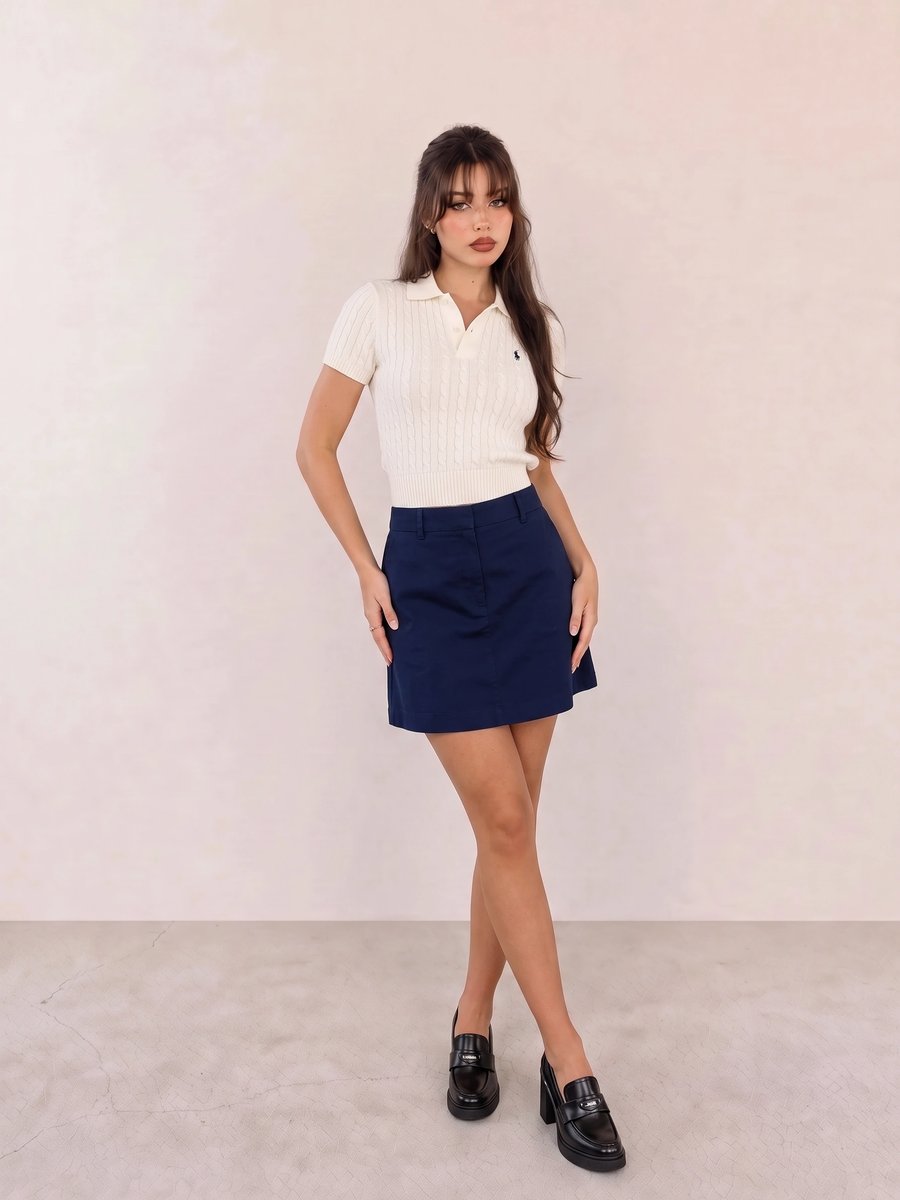
The cable-knit polo and pleated mini skirt is this list's clearest nod to the aesthetic's prep-school roots — a polo collar reads campus, and a pleated mini keeps it structured rather than schoolgirl. This is the outfit for a fall afternoon on a college campus, walking between buildings with a coffee, not trying to look like you tried.
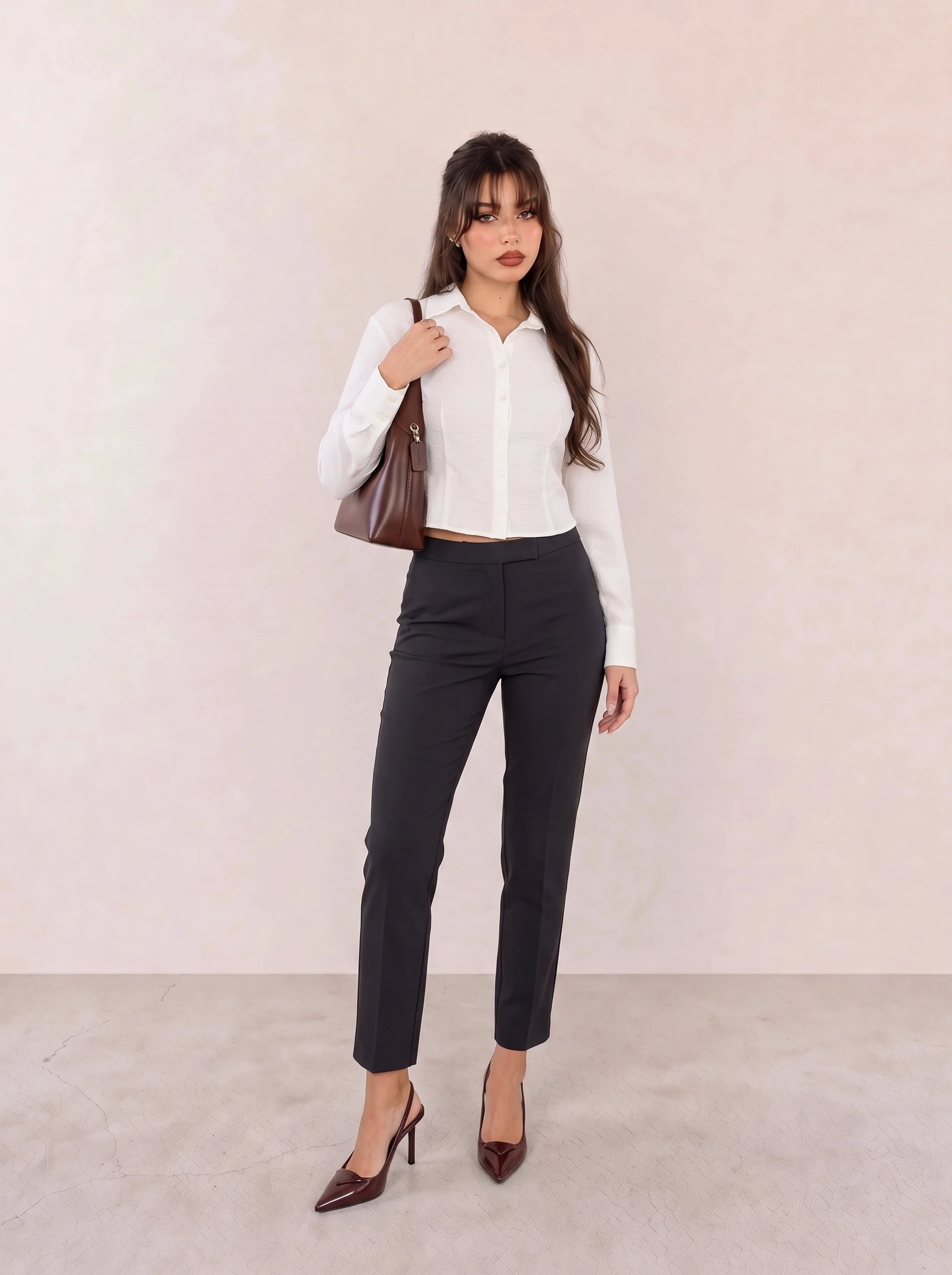
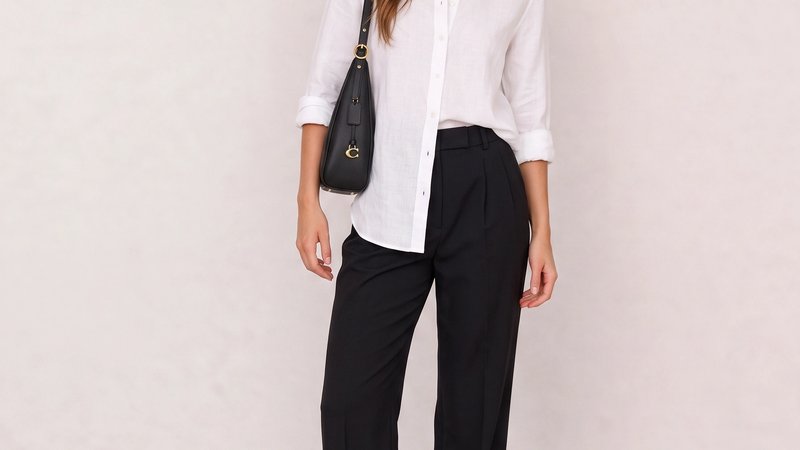
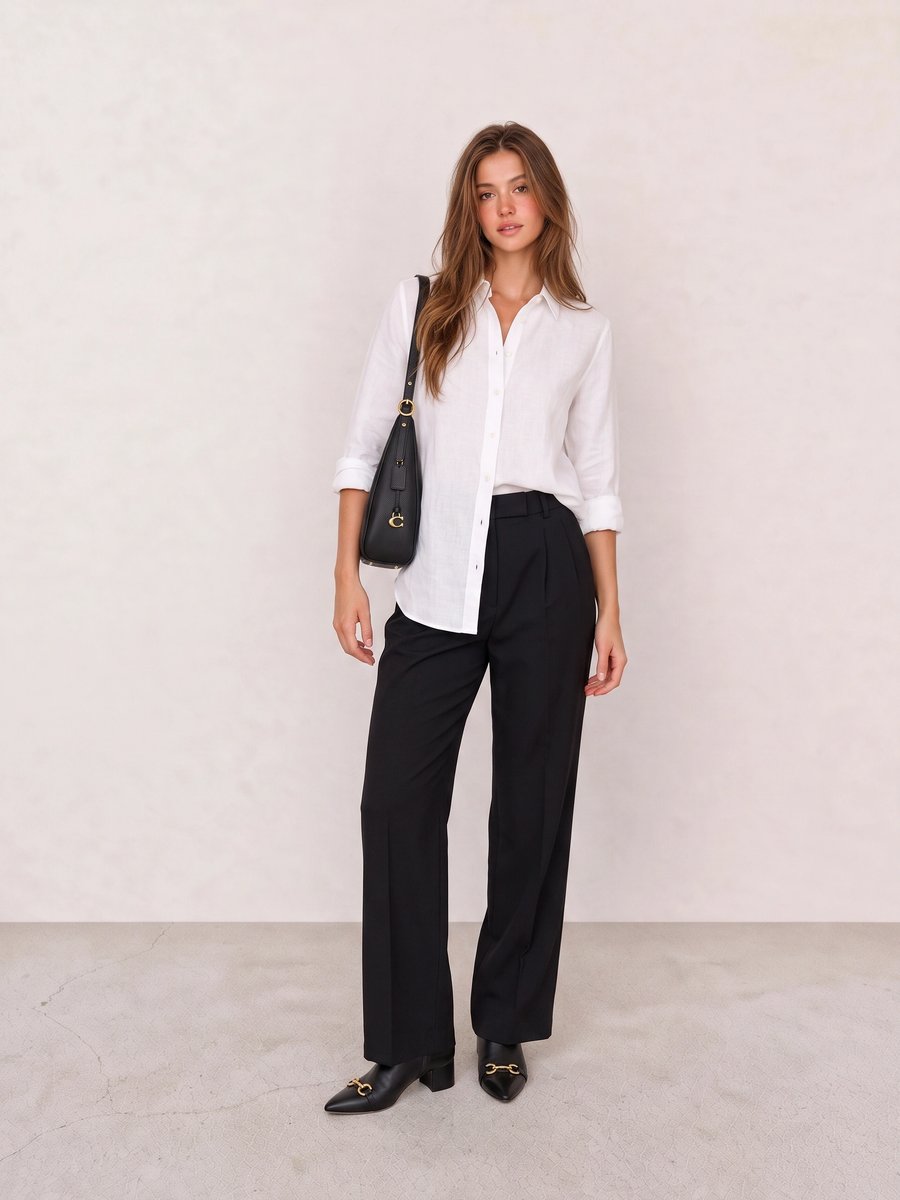
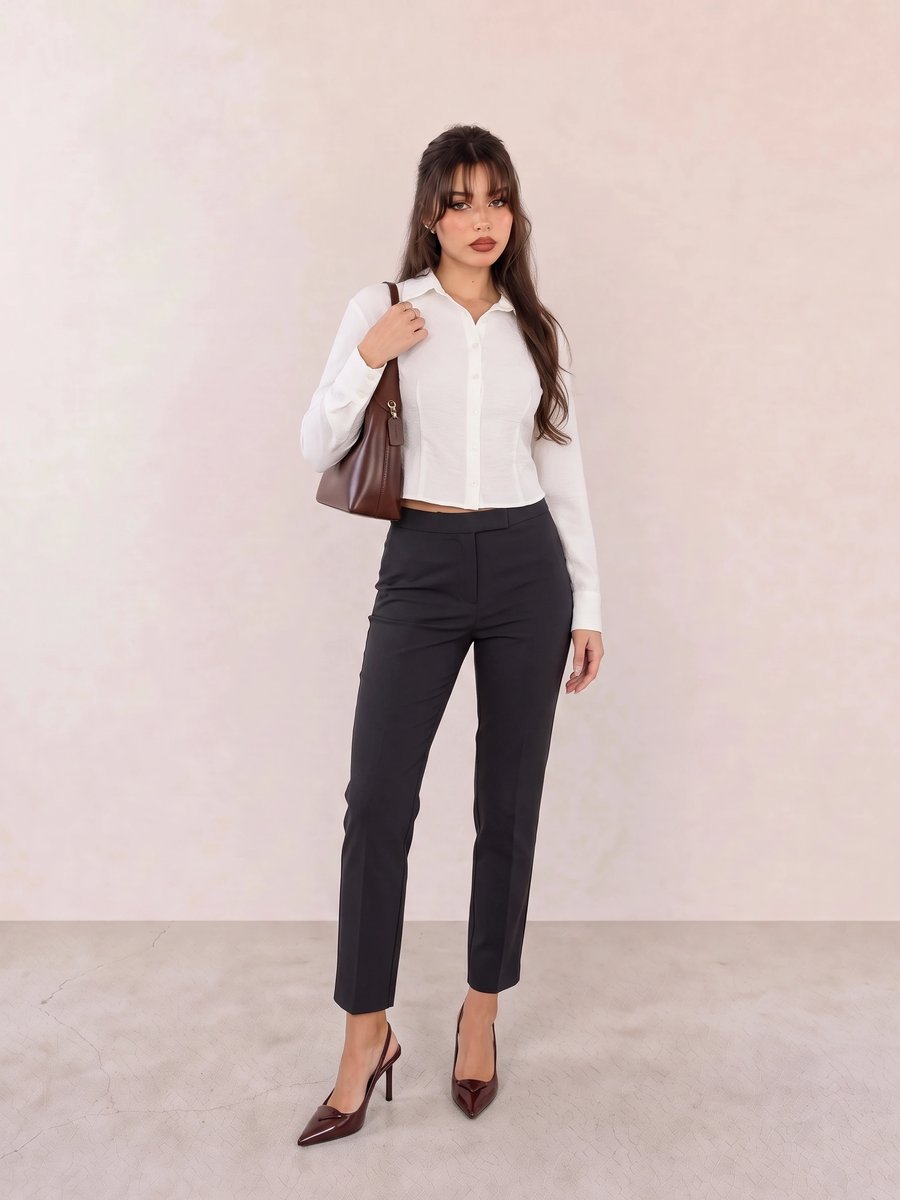
Avoid pairing linen with anything else structured — but here, the linen shirt and tapered trousers work precisely because the trouser stays clean and unpatterned, letting the linen's natural texture be the only relaxed element. The burgundy slingback heel is the strongest option on this list for elevating a daytime outfit into evening without a full change.
Shopping Old Money Style on Any Budget
Investment tier: spend on the blazer, the trousers, and the shoes. These three pieces carry the tailoring signal the whole aesthetic depends on, and a badly fitted version of any of them undercuts everything else in the outfit. A well-made wool-blend blazer and a genuine leather loafer are worth the higher price because fit and material quality are visible from across a room.
Mid-range: the button-down shirt, the knitwear, and the bag. These get worn often enough to justify a mid-tier spend, but the aesthetic doesn't require luxury fabric here — a good cotton poplin shirt or an acrylic-wool blend sweater in the right color reads correctly as long as the fit is right.
Where to save: the pleated skirt, the shorts, and any seasonal piece you'll wear for one or two seasons. Save on trend-adjacent pieces, not on the pieces that carry the silhouette — the mini skirt or shorts change with the season anyway, so there's little reason to overspend there.
For a starter capsule, build around the black blouse and wide-leg trouser pairing — it's the most repeatable formula on this list and the easiest to expand piece by piece as budget allows.
Old Money Style: Frequently Asked Questions
What is old money style? Old money style is a fashion aesthetic built on tailored, understated clothing — wide-leg trousers, button-down shirts, cable-knit sweaters, and leather loafers — in a restrained palette of navy, cream, camel, and burgundy. It signals wealth through fit and fabric quality rather than visible logos or branding.
Is old money style the same as quiet luxury? No. Quiet luxury is a more minimal, colder aesthetic built around price and near-monochrome dressing, while old money allows for plaid, pinstripe, and richer color as long as the palette stays disciplined and every piece looks tailored.
How do you dress old money on a budget? Prioritize spending on the blazer, trousers, and shoes, since fit is what makes the aesthetic read as intentional. Mid-range spending works for shirts and knitwear, and it's fine to save on trend pieces like a pleated mini skirt or seasonal shorts.
What colors are used in old money fashion? The core palette is navy, cream, camel, burgundy, charcoal, and black, with occasional light blue or beige. Outfits typically limit themselves to four colors total, which keeps the look feeling tailored rather than assembled.
What are the biggest old money style mistakes? Visible logos, head-to-toe tennis whites with pearls, poorly fitted fast-fashion tailoring, and chunky branded sneakers are the most common traps. Each one shifts the outfit away from understated tailoring and toward costume or streetwear.
Old money style rewards restraint over accumulation — one good blazer will outlast ten trend pieces. Browse the full old money outfit collection and start with whichever formula above matches pieces you already own.
Weekly outfit picks and style guides — no fluff, unsubscribe anytime.